Project Management

The difference between winning and losing customers is no longer product or price. It's analytics.
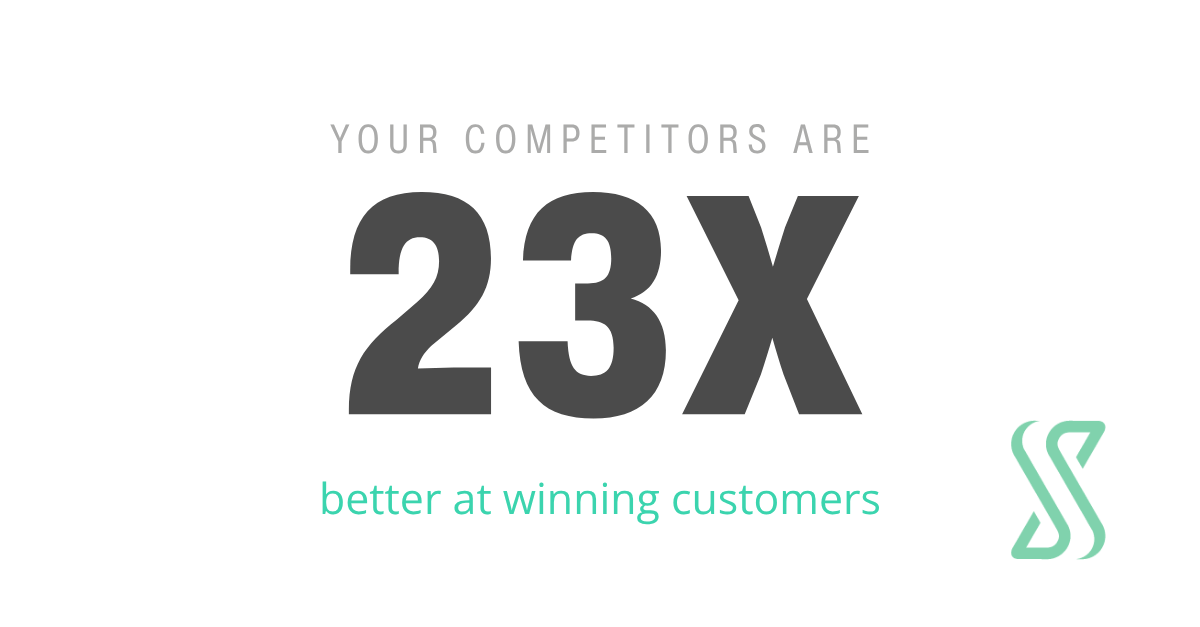
Organizations that master data analytics don't just make better decisions: they acquire customers with 23x greater effectiveness, retain more of them, and are up to 19x more profitable. This article examines why that gap exists and what separates organizations that execute from those that only have a strategy.
Reading time: 9 minutes | Keywords: data analytics, customer acquisition, data-driven decisions, competitive advantage, digital transformation, customer retention, predictive analytics
| Key Takeaways |
Organizations that master analytics are 23x more likely to acquire customers than those without mature data strategies.
|
The statistic that organizations mastering analytics are 23x more likely to acquire customers is not hyperbole. It's grounded in comprehensive analysis of enterprise behavior and business outcomes. This extraordinary differential deserves careful examination, because understanding why it exists reveals fundamental truths about modern business competition.
Consider two companies in the same industry. Company A makes customer acquisition decisions based on intuition, past patterns, and general marketing best practices. They allocate marketing budget to channels they've historically used, without precisely understanding which channels drive the most valuable customer acquisitions. They launch products without deeply analyzing market demand. They retain the same sales approach even when customer acquisition costs are rising.
Company B has invested in analytics capabilities. They know which marketing channels deliver the best return on acquisition spend. They understand the characteristics of their most valuable customers and target similar profiles. They analyze competitor activity, market trends, and emerging customer needs to identify white space for new products. They continuously test different sales approaches and measure which ones drive better outcomes. They optimize their operations based on data insights rather than tradition.
"The 23x advantage in customer acquisition isn't about having more data. It's about converting data into decisions that guide every customer-facing activity in the business."
The performance gap between these two companies compounds over time. Company B's superior customer acquisition efficiency generates more revenue, which is reinvested in better analytics capabilities and richer data collection. The lead widens. Over multiple years, the data advantage creates a competitive moat that is difficult for competitors to cross.
While the 23x customer acquisition advantage captures attention, the full power of analytics manifests across the entire customer lifecycle. Organizations with mature analytics capabilities don't just acquire customers better — they retain them better and extract more value from every relationship.
The retention advantage deserves particular attention. Once a customer is acquired, data-driven organizations use analytics to understand what keeps customers engaged and satisfied, identify customers at risk of churn and intervene proactively, personalize the experience based on individual preferences and behavior patterns, and recommend products and services aligned with each customer's needs.
The profitability advantage (19x) reflects optimization across the entire business: pricing strategies informed by demand analysis, product decisions informed by customer needs analysis, operational efficiency informed by process analytics, and resource allocation informed by ROI analysis. When every business decision is informed by data rather than intuition, the cumulative impact is extraordinary.
Consider a manufacturing company implementing comprehensive analytics. They analyze sales data and discover that customers in certain geographic regions have different product preferences — and adjust their product mix by region. They identify supply chain inefficiencies and eliminate them. They discover that certain product configurations generate higher support costs and redesign the offering. Each improvement cascades: lower costs improve margins, better products drive higher retention, smarter marketing reduces acquisition cost. That is how the 19x profitability advantage emerges.
An interesting paradox characterizes the analytics landscape: 68% of enterprises have formal data strategies, yet many struggle with execution and deriving meaningful business impact. This gap between strategy and execution is one of the most important insights for organizations planning analytics investments.
Why does this gap exist? In today's business environment, executives who lack a formal data strategy are seen as behind the times. So many organizations have created data strategies as a checkbox exercise: they identify data as important, allocate some budget, and establish a chief data officer position. But underlying the strategy is often insufficient organizational change, inadequate training, and lack of clear accountability for analytics-driven decision making.
Organizations that successfully close this gap invest in several areas simultaneously. They modernize their data infrastructure, invest in analytics talent and training, establish clear data governance, and create organizational structures that require analytics input into important decisions. They accept that analytics implementation is a multi-year journey, not a quick fix.
The analytics software market reached $132.9 billion in 2025 and is projected to grow 22% annually through 2028. This explosive growth reflects the genuine business value organizations are realizing from analytics investments — and reveals where they are prioritizing their capital.
Investment is not distributed evenly. Advanced analytics capabilities (machine learning, AI-driven insights, predictive analytics) are growing faster than basic analytics tools. This reflects organizational recognition that the greatest business value comes from sophisticated analysis that predicts future outcomes, not just descriptive analysis of past results.
Cloud-based analytics platforms are growing faster than on-premise solutions, offering elasticity, global scalability, and rapid access to new capabilities. Self-service analytics tools are gaining ground as organizations recognize that analytics value multiplies when business users can ask and answer their own questions without requiring technical specialists. And domain-specific analytics platforms (healthcare, retail, financial services) are proliferating because generic tools often miss critical domain-specific insights.
A fundamental shift is underway in how organizations compete. Historically, competitive advantage came from product features, brand strength, sales force effectiveness, or operational efficiency. These factors still matter, but they are increasingly converging on a single underlying capability: data analytics. By 2026, 65% of B2B organizations will primarily compete on analytics capabilities — not as a soft competitive advantage, but as a primary determinant of market success.
Competing on analytics means making data-driven decisions about what products to build, recognizing emerging customer needs before competitors do, using customer data to create personalized experiences competitors cannot replicate, identifying operational inefficiencies competitors haven't noticed, and pricing products intelligently based on demand elasticity and customer willingness to pay.
"A competitor could potentially copy a product feature or a marketing approach. They cannot easily copy a mature analytics capability."
Organizations that will win in their markets over the next decade will be those that execute faster, smarter, and more cost-effectively than competitors through superior analytics capabilities.
The difference between organizations that achieve extraordinary analytics benefits and those that struggle typically comes down to execution: the process of converting data into decisions. This is harder than it sounds and requires investment in several dimensions.
Organizations like Amazon have built competitive advantage through disciplined execution across these five elements. Their famous dashboard culture — where every business decision is informed by detailed metrics and analytics — produces decision-making speed and quality that competitors struggle to match.
As analytics matures in organizations, it typically progresses through three stages: descriptive analytics (what happened), predictive analytics (what will happen), and prescriptive analytics (what should we do). Each stage delivers greater business value.
Descriptive analytics answers questions like "How many customers did we acquire last month?" or "What was our average order value?" This is foundational analytics that organizations must get right, but it only looks backward at what already happened.
Predictive analytics answers questions like "Which customers are likely to churn?" or "What will demand be next quarter?" It uses historical patterns to forecast future outcomes, allowing proactive decision making. Rather than reacting to churn after it happens, organizations can identify at-risk customers and intervene before they leave.
Prescriptive analytics answers questions like "What's the optimal price for this product?" or "How should we allocate marketing budget to maximize ROI?" It doesn't just predict outcomes — it recommends optimal actions. This is the most valuable form of analytics because it directly guides decision making.
Organizations deploying advanced analytics in these areas see remarkable results: higher customer lifetime value, better margin capture, and improved return on marketing spend. The value compounds: better margins and ROI fund investments in even more sophisticated analytics capabilities.
Organizations that successfully accelerate their analytics journey don't attempt to build comprehensive capabilities all at once. They progress through deliberate stages.
"Analytics is not primarily a technology investment. It's an organizational transformation that requires changes in leadership mindset, decision-making processes, and team skills."
Do you have the data but aren't seeing the business impact you expected?
At Strolling Digital, we help organizations bridge the gap between having data and making better decisions. Let's talk.
Because they can precisely identify which marketing channels generate the most valuable customers, target high-profitability profiles, continuously optimize their acquisition strategies, and make decisions based on evidence rather than intuition. This combination produces a compounding efficiency that competitors without analytics capabilities cannot match.
It means most organizations have formally declared that data matters, but lack the organizational change, training, and accountability needed to translate that strategy into better decisions. Having a data strategy and being a truly data-driven organization are two very different things.
The most common are technical debt in legacy data systems, difficulty recruiting and retaining specialized analytics talent, absence of clear data governance, organizational resistance to change, and decision-making processes that are too slow to act on insights before market conditions shift.
Descriptive analytics explains what has already happened. Predictive analytics anticipates what is likely to happen, using historical patterns to enable proactive decisions. Prescriptive analytics goes a step further and recommends the optimal actions to achieve a desired outcome. Each level delivers greater strategic value than the one before it.
Because analytics has become the cross-cutting enabler of every other competitive advantage: product, pricing, customer experience, operational efficiency. Organizations that master data can identify opportunities before rivals, personalize at scale, and optimize continuously. That creates a competitive moat that is very difficult to cross without equivalent analytics capabilities.
No. The growth of cloud analytics platforms and self-service tools has democratized access. Organizations can start with modest investments, scale progressively, and achieve tangible results without massive upfront infrastructure. The key is starting with the right business questions, not the most sophisticated technology.
The starting point is foundation: establishing data governance, defining key metrics, and creating basic dashboards that inform daily decisions. From there, the organization can invest in analytics talent and tools, identify the highest-value business questions, and progress toward more advanced capabilities such as predictive and prescriptive analytics.