Change Management
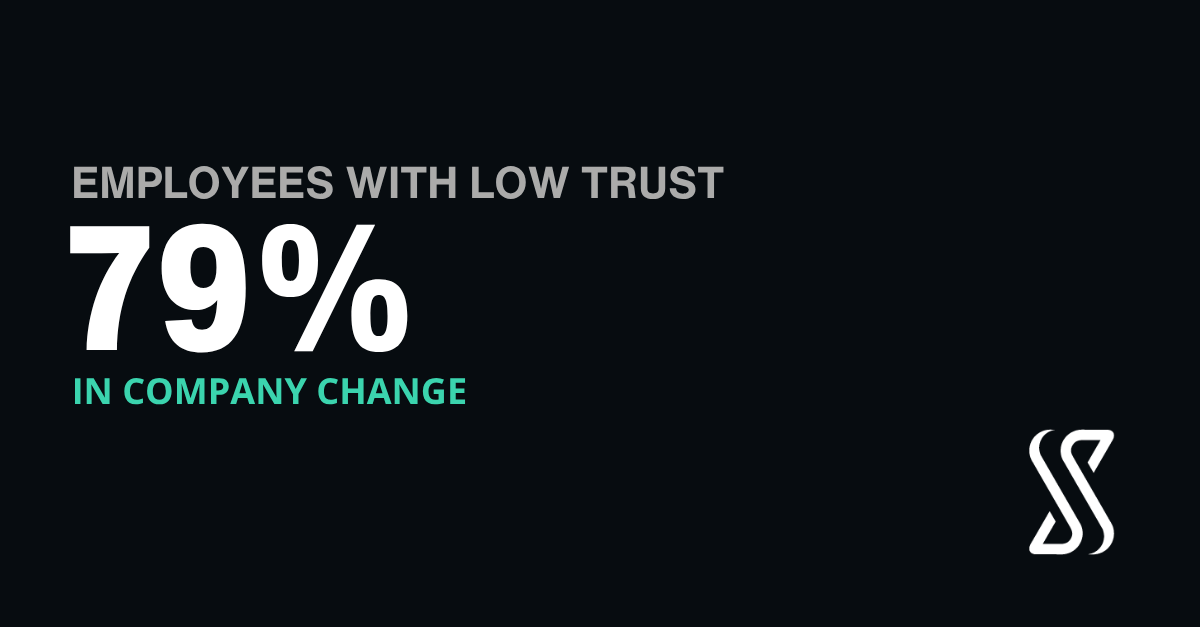

79% of employees have low trust in the changes their company drives (Gartner, 2025). In operations, that distrust shows up as inventories that don't reconcile, duplicated processes and systems nobody uses.
Organizational resistance to change never appears in the project timeline, but it decides whether the project works. 70% of change programs fail to achieve their goals, largely due to employee resistance and lack of management support (McKinsey, 2015).
Reading time: 8 minutes | Keywords: organizational resistance to change, why change management fails, change adoption, middle managers, change leadership
| Key Takeaways |
70% of change programs fail to achieve their goals, largely due to employee resistance and lack of management support (McKinsey, 2015).
|
In companies where the real work happens in the store, in the warehouse or in front of the customer, that resistance takes very concrete forms: the warehouse manager who keeps his Excel file, the store team that goes back to the old checkout procedure, the sales rep who doesn't update the CRM.
None of them said no in a meeting. They simply keep working the way they always have. And the new system, which cost months and budget, becomes one more layer of work that someone has to maintain by hand.
Most transformations are planned as technology projects. The budget goes to licenses, integration and data migration. Change management shows up at the end, as one line in the plan: training two weeks before go-live, an email from the CEO and a PDF manual.
The result repeats itself. Only 32% of business leaders say their last change initiative achieved healthy adoption by employees (Gartner, 2025). The rest live with partial adoption, which is the most expensive way to fail, because it doesn't show up in project reports.
The pattern we find inside companies is almost always the same. The system goes live, the project indicators look good for the first few weeks, and around month three the parallel Excel file comes back. Nobody decided that formally. Each manager went back to what worked for them, and leadership finds out when the numbers in the system and the numbers in the warehouse stop matching.
In 1969, Paul Lawrence already wrote it in Harvard Business Review: the real problem is not technical change but the human changes that often accompany it (HBR, 1969). More than five decades later, companies still budget for the technical side and leave the human side for the end.
The consequence is operational and hits cash directly. Stock that shows as available in the system but isn't in the warehouse creates an order that can't be fulfilled. A return logged by hand a week late throws off the store's closing. An opportunity that isn't updated in the CRM leaves the sales team selling with old information.
"When the team goes back to Excel, the new system keeps working. What stops working is the company, because now it has two versions of the truth."
The usual reaction to resistance is to treat it as an obstacle: more training, more communication, more pressure. Ron Carucci argues the opposite in Harvard Business Review: leaders who treat resistance as noise miss what that resistance is telling them (HBR, 2026). Resistance is information about the project, and it should be diagnosed before it is interpreted.
Rick Maurer, in a paper published by the Project Management Institute, distinguishes two levels. At the first, people don't understand the change or don't know how it affects them. At the second, the objection is no longer intellectual: it is personal, and it comes from fear or a sense of threat (PMI, 1998). A good presentation solves the first level. It doesn't solve the second.
The starting level of distrust is high. 79% of employees have low trust in change, according to a Gartner survey of more than 2,850 employees (Gartner, 2025). With that starting point, any transformation project begins at a disadvantage.
In our experience, organizational resistance to change almost always comes from a combination of four causes.
The team knows a new system is coming. They don't know what changes on Monday at eight in the morning. The warehouse manager doesn't know whether returns will still be logged the same way, the store team doesn't know whether the new terminal replaces the cash closing procedure or adds to it. When nobody answers those questions, each person answers them on their own, and almost always in the most conservative way.
Many teams receive the change in phases, without seeing the full path. They don't know what comes next, how long the transition will last or when the old system will be switched off. Without a map, the rational choice is to wait and see whether the change sticks before investing effort in it.
If the last two projects were abandoned halfway, the team has learned that the best strategy is to wait. It isn't a lack of commitment, it is organizational memory. That waiting has a cost: while the team waits, the project consumes budget without generating adoption.
Carucci points to loss as one of the main drivers of resistance (HBR, 2026). In operations it usually has a name. The warehouse manager who knows by heart where every item is loses his advantage when that information moves into a system anyone can check. The most senior store manager loses autonomy when her decisions start being recorded. Nobody will say that out loud, but it shapes everything they do.
When adoption doesn't come, leadership usually responds with more pressure: mandatory deadlines, reminders, follow-up meetings. The problem is that the signal the team receives doesn't come from emails, it comes from what leadership does.
86% of leaders say they role modeled the behavior changes the transformation required, but only 50% of other employees saw it that way (McKinsey, 2015). The same research found that transformations where leaders role model the change are 5.3 times more likely to succeed. If the executive committee keeps asking for the Excel report, Excel wins, even if the new system has the same data.
Top-level commitment is not enough. In BCG's study of 900 digital transformations, three out of four companies reported good commitment from senior leadership, but only one in three achieved commitment from middle management (BCG, 2020). In retail, logistics or services, those managers are store managers, warehouse managers and sales team leads. They are the ones who decide, every day, whether the system gets used or worked around.
There is one cause of resistance that almost nobody reviews: incentives. If the warehouse manager is evaluated on shipping deadlines and the new system adds logging time, the system competes with his goal. If the sales rep is paid per signed contract and not for the quality of CRM data, the CRM will be the last thing he updates. If the store manager is valued for solving issues from memory, a system that makes that information visible threatens her position.
In those cases, resistance is a logical response to an incentive system that nobody changed.
"If the new system takes away the one thing that made the warehouse manager indispensable, don't expect him to adopt it. Expect him to politely work around it."
At Strolling Digital we work from inside projects, not from the final report. Change management is not a phase at the end of the plan, it is part of the project design from day one. This is how we approach organizational resistance to change.
1. Diagnose resistance before go-live. We talk to the people who will use the system every day: store, warehouse, administration and sales teams. The goal is to identify who loses what with the change and which objections are legitimate. Many of them point to real design flaws that are cheaper to fix before than after.
2. Translate the change into each role's workday. Instead of a general manual, each role gets a concrete map: what it stops doing, what it starts doing, which tool it uses and who to go to when something fails. This solves the first level of resistance and reduces the uncertainty of the second.
3. Review incentives and KPIs before launch. If a role's goals reward the old process, the change will not reach that role. Adjusting indicators and evaluation is part of the project, not an HR topic for later.
4. Give middle managers an ownership role. Store, warehouse and team managers take part in the design and in rollout decisions. When the change is also theirs, they stop being messengers of someone else's decision.
5. Make leadership visible on the ground. Leadership uses reports from the new system in its meetings, retires the parallel Excel file on a clear date and communicates progress with data. What leadership does is the message the team believes.
6. Measure real adoption, not completed training. Having 100% of the team attend training says nothing about whether the system is used. We measure real usage, duplicate records and process times, and act on the teams where adoption stalls.
This approach comes from projects where technology was only one part of the challenge, such as Yves Rocher's point-of-sale transformation in Spain and Italy or Stanhome's logistics merger between Spain and France. When the company doesn't have an internal owner able to lead the transition, we take it on through an interim management model, with direct responsibility for the result.
"Resistance is not the problem to eliminate. It is the most honest report you will get on your project."
Organizational resistance to change doesn't disappear with more training or more pressure. It shrinks when you understand where it comes from, when incentives stop rewarding the old process and when leadership does what it asks for. Companies that treat it as information reach month three with a system in use. Those that treat it as an obstacle reach it with a parallel Excel file and a project that can no longer be measured.
Is your latest system living alongside a parallel Excel file nobody has switched off?
An adoption diagnostic shows where resistance sits in your organization and what keeps it alive, before it turns into cost. Do it with Strolling Digital. Let's talk.
Because it is usually planned as the final phase of a technology project rather than as part of its design. 70% of change programs fail to achieve their goals, largely due to employee resistance and lack of management support (McKinsey, 2015). When training and communication arrive a few weeks before go-live, teams adopt the system only partially and keep parallel processes.
The most frequent are not knowing how daily work will change, lack of information about the full path of the project, a culture where previous changes did not stick, and a sense of losing autonomy, status or control. Incentives that still reward the old process add to this. Several causes usually act at the same time.
By treating resistance as information before interpreting it. Harvard Business Review recommends diagnosing what lies behind the pushback instead of labeling it as a negative attitude (HBR, 2026). Many objections from operational teams point to real flaws in the design of the process or the system, which are cheaper to fix before go-live.
They are the ones who decide, day to day, whether the system is used or avoided. BCG found that three out of four companies achieved good commitment from senior leadership, but only one in three achieved it among middle managers (BCG, 2020). Involving them in design and rollout makes them owners of the change rather than simple messengers.
If a role's goals and evaluation reward the old way of working, the new system competes with those goals and loses. A warehouse manager evaluated only on shipping deadlines, or a sales rep paid only per signed contract, has logical reasons not to spend time logging data. Reviewing incentives and KPIs before launch is part of change management.
By measuring real use of the system, not training attendance. Useful indicators are the share of operations recorded in the new system, the presence of duplicate or parallel records, and the evolution of process times. Only 32% of business leaders say their last initiative achieved healthy adoption (Gartner, 2025), so measuring adoption is the only way to know which group your company is in.