Project Management
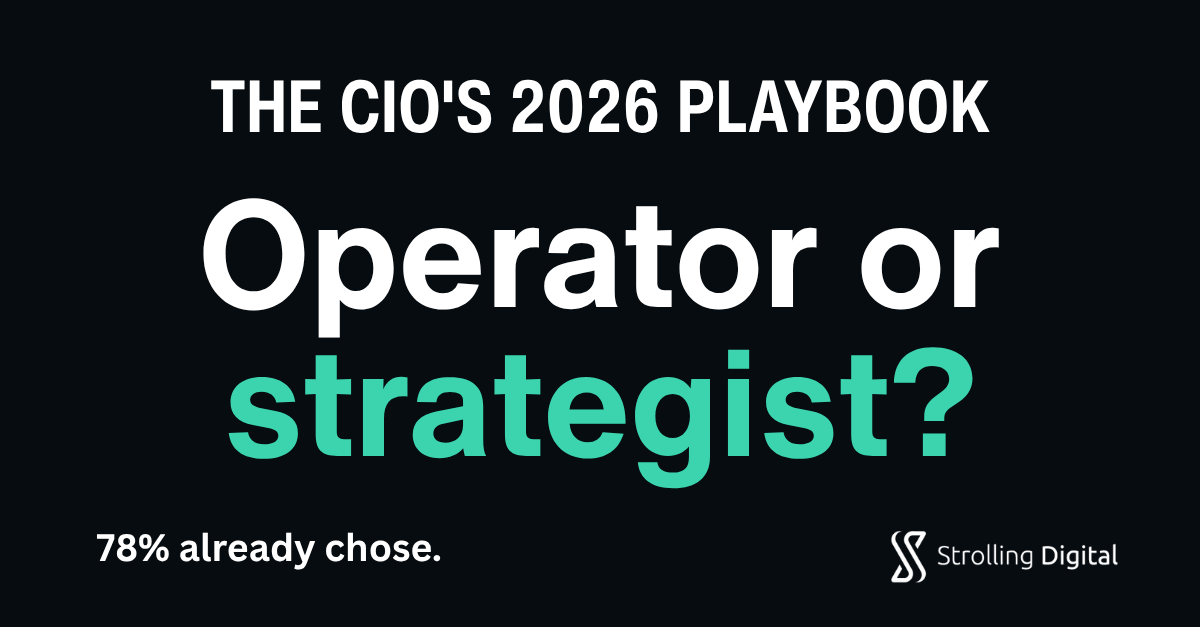

Cloud transformation is no longer optional, it is the foundation of competitive survival for any organization expecting its CIO to lead.
The Chief Information Officer role has undergone profound transformation. Cloud transformation now sits at the center of most CIO strategies, with 78% of technology leaders naming it their top strategic priority in a global market worth $732 billion.
Reading time: 8 minutes | Keywords: cloud transformation, CIO strategic role, IT-business alignment, technology leadership 2026, digital transformation
| Key Takeaways |
78% of CIOs prioritize cloud transformation as a strategic imperative — in a $732 billion market where 94% of enterprises already use cloud services.
|
The Chief Information Officer role has undergone profound transformation. A decade ago, CIOs primarily managed IT operations — keeping systems running, maintaining security, managing infrastructure costs. Today's leading CIOs drive business transformation, accelerate innovation, and create competitive advantage through strategic technology decisions.
This evolution reflects a changed business reality. Technology is no longer support for business operations — it IS the business. Organizations without technology excellence cannot compete. CIOs have become strategic partners in achieving business objectives rather than support functions enabling others' work.
"78% of CIOs prioritize cloud transformation, recognizing cloud as the foundation for the agility, innovation, and scalability that competitive markets demand."
The most successful CIOs sit at executive tables, influence board decisions, shape corporate strategy, and drive business outcomes. Organizations where CIOs function as strategic partners outpace competitors on innovation, agility, and market responsiveness. Those treating CIOs as IT operators fall progressively behind.
Cloud transformation represents the centerpiece of most CIO strategies. The $732 billion cloud market and 94% enterprise cloud adoption demonstrate unambiguous movement toward cloud-first operations. CIOs recognize that organizations operating on modern cloud platforms gain competitive advantages that on-premises operations cannot match.
CIOs who delay cloud investment accumulate technical debt, struggle with legacy system constraints, and find themselves unable to compete with digitally native competitors.
69% of CIOs cite digital transformation as a key business driver, reflecting the depth of technology's impact on organizational strategy. Digital transformation is not an IT initiative — it is business transformation enabled by technology.
Leading CIOs have elevated their communication capability to board level. They articulate technology strategy in business terms, explaining how cloud transformation, data modernization, and AI adoption drive revenue growth, cost reduction, and competitive advantage. They translate technology initiatives into business outcomes.
CIOs who cannot communicate effectively at board level struggle to secure investment, face skepticism about their strategy, and find executives dismissive of technology priorities. Those who excel at executive communication gain support, secure the budgets they need, and position technology as a business advantage rather than a cost center.
Successful CIOs break down the traditional IT-business separation. Rather than business defining requirements and IT implementing, the models that work involve joint planning — where IT contributes strategic insight and business prioritizes investments based on technology capabilities. This alignment dramatically improves outcomes.
Leading CIOs require capabilities well beyond traditional technical expertise. The role now demands a combination of strategic, communicative, and organizational skills that were previously outside the IT remit.
CIOs positioned as business transformation leaders achieve dramatically better outcomes than those functioning as IT operators across four dimensions:
"The CIO role has evolved from infrastructure management to business partnership. CIOs who embrace this evolution position their organizations for competitive leadership; those clinging to traditional IT operations find themselves marginalized and ineffective."
Leading CIOs in 2026 structure their agenda around four priorities that define where the organization will compete — and where it will fall behind if it does not act.
CIOs who execute effectively on this agenda position their organizations for sustained competitive advantage. Those who fall short in any dimension risk a gap that will be difficult to close.
Is your organization treating IT as a cost center or as a driver of strategic transformation?
We work with CIOs and technology leaders to build the strategy, executive communication, and roadmap that turn IT into real competitive advantage. Strolling Digital. Let's talk.
Because cloud has become the operational foundation for agility, scalability, and innovation access that competitive markets require. With a global market valued at $732 billion and 94% of enterprises already using cloud services, on-premises-first strategies no longer represent a viable competitive position — they represent accumulated technical debt against digitally native competitors.
The CIO has evolved from an infrastructure and operations manager to a strategic business partner. The shift is not cosmetic — it reflects a structural change in how technology relates to business outcomes. Today's CIOs shape corporate strategy, communicate at board level, and drive transformation initiatives alongside the rest of the executive team.
Alignment requires four structural changes: joint planning (IT at the business table, business at the technology table), shared metrics tied to business outcomes rather than IT-centric KPIs, integrated teams embedded in business functions rather than siloed IT departments, and ongoing dialogue replacing episodic requirement gathering.
Cloud transformation (migration, modernization, cloud-native capabilities), data and AI (modern data infrastructure, analytics, democratized access), security and governance (comprehensive frameworks, AI governance, regulatory compliance), and talent and culture (high-performing teams, learning culture, IT as employer of choice).
Strategic CIOs shape decisions before they are made — operational CIOs respond to them. The practical consequences: larger budgets (because IT is seen as a business enabler, not a cost center), stronger talent pipelines, and measurably better outcomes on innovation speed, time-to-market, and competitive positioning.
Strategic thinking (connecting technology decisions to business outcomes), executive communication (translating complex technology concepts for board audiences), change management (guiding organizations through transformation), risk governance (balancing innovation with appropriate risk management), and talent development (recruiting, developing, and retaining high-caliber technical teams).