Digital Transformation

Digital-first onboarding doesn't replace human connection. It orchestrates it.
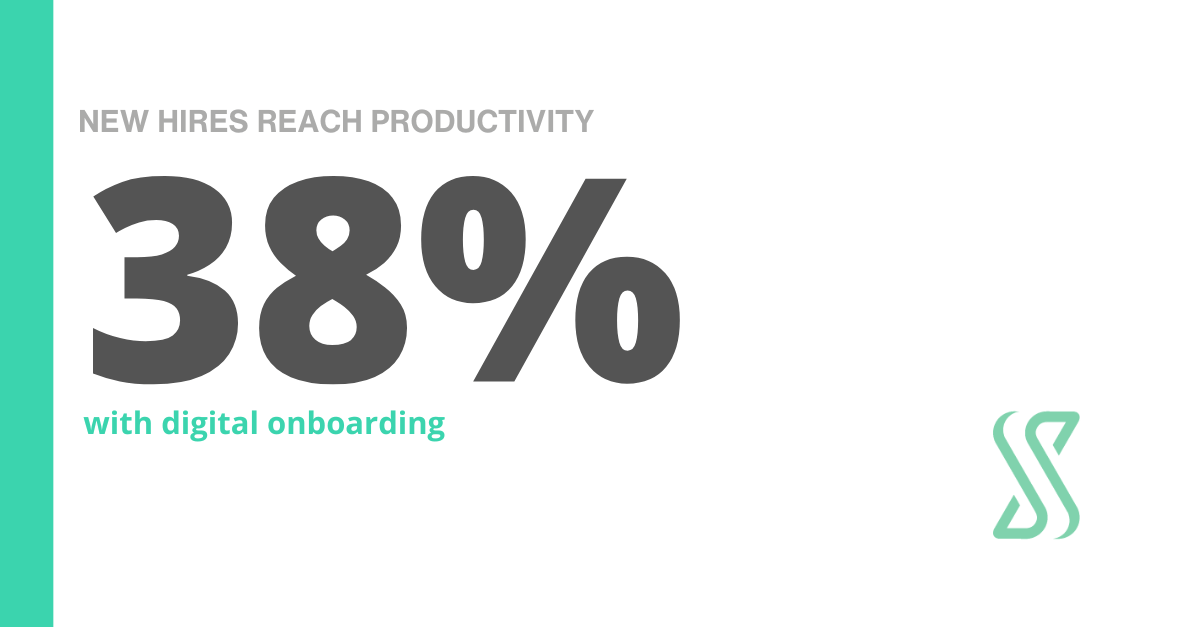
81% of new employees report feeling unprepared on their first day. Digital-first onboarding changes that equation: it cuts time-to-productivity by 38% and improves first-year retention by 25%.
Reading time: 10 minutes | Keywords: digital onboarding, hybrid workplaces, talent retention, time-to-productivity, change management
| Key Takeaways |
81% of new employees arrive unprepared on day one. Digital-first onboarding reduces that impact: 38% faster time-to-productivity, 25% better first-year retention. (Strolling Digital primary internal source)
|
The first day at a new organization is simultaneously one of the most important and most chaotic moments in the employment lifecycle. New employees are eager to contribute, managers are focused on getting them productive, and the organization has invested significantly in recruitment. Yet research consistently shows that organizations make a mess of this critical moment.
81% of new employees report feeling unprepared on their first day. They don't know where to find tools, have unclear understanding of role expectations, lack clarity on who to connect with, and often feel overwhelmed by information overload. These first-day experiences shape employee perception, engagement, and retention in ways that persist throughout employment. (Strolling Digital primary internal source, 2026)
Traditional onboarding approaches contribute to this problem. Many organizations still treat onboarding as a department function: HR collects paperwork, IT provisions equipment, the hiring manager schedules time to meet. These processes operate independently rather than being orchestrated, creating fragmented experiences. New employees encounter different people on different days, receive inconsistent information, lack visibility into what they should be doing, and don't develop meaningful team connections during their critical first weeks.
The shift to hybrid and remote work has exposed onboarding's shortcomings. When everyone worked from an office, new employees could at least observe how work happened and connect informally with teammates. In hybrid environments, without intentional digital-first onboarding, new employees can become profoundly isolated: unclear about remote work norms, without informal peer connection, and lacking insight into organizational culture.
Digital-first onboarding doesn't position technology as the primary mechanism. Technology enables and orchestrates human connection. The most effective programs use digital platforms to deliver personalized content, coordinate activities, facilitate connection, and measure progress.
Modern onboarding begins before the new employee's first day. Digital onboarding platforms deliver welcome messages, gather pre-boarding information, share organizational overview content, and help new employees prepare psychologically for arrival. This pre-arrival engagement reduces first-day anxiety, begins relationship-building before arrival, and personalizes the experience: the organization has already communicated that it's expecting this person.
Effective pre-arrival onboarding gathers information about the new employee (remote vs. office preferences, background, goals) that enables the organization to personalize the experience. It also communicates expectations and orientation logistics, and lets the new employee ask questions before arrival. The impact is direct: the employee arrives feeling known and expected, not like a generic new hire.
Day one of modern onboarding is orchestrated through digital systems that guide activity and facilitate connection. Rather than receiving unstructured direction from their manager, the new employee accesses an onboarding portal that provides:
This digital orchestration doesn't reduce human connection, it increases it. Instead of the manager scrambling to cover everything reactively, they know the digital system handled the basics and can focus the conversation on relationship-building and role-specific context.
Modern onboarding extends beyond the first day into the first weeks and months. Digital learning platforms deliver ongoing content: organizational context, role-specific training, product or service overviews, and customer and market information. This learning is delivered in small modules, enabling integration alongside actual work. The new employee learns about systems as they actually need to use them, not before they understand the context.
Digital onboarding systems allow the experience to be measured with precision. Organizations can track which modules drive engagement, which points create confusion, how effectively team connections are forming, and how quickly productivity increases. If a module shows low engagement, it gets redesigned. If certain team connections aren't forming, buddy matching gets adjusted. If a cohort shows a slower productivity ramp, the cause gets diagnosed.
Structured mentorship and buddy systems accelerate integration and productivity. Rather than leaving peer connection to chance, organizations formally assign a buddy, usually a peer in a similar role who provides informal guidance and social connection. Digital systems facilitate these relationships: scheduling time, providing talking points, and enabling asynchronous communication when time zone differences exist.
Mentorship differs from the buddy system: mentors are typically more senior, focus on development and career guidance, and maintain relationships long-term. Both are essential. New employees with both roles assigned reach full productivity 35% faster and show 41% higher retention in their first three years, compared to new employees without formal relationships. (Strolling Digital primary internal source, 2026)
"Peer connection doesn't happen by default in hybrid environments. If it isn't designed, it doesn't exist."
Managers are critical to onboarding success. Yet many receive minimal training on how to effectively onboard and integrate new talent. Modern onboarding gives managers:
This enablement transforms onboarding from an ad hoc activity into a structured experience. Managers can focus on relationship-building and strategic context, instead of trying to remember what they forgot to cover.
Beyond role-specific onboarding, organizations need to transmit culture, values, and operating norms intentionally. This happens through both explicit mechanisms (training, guidelines) and implicit ones (how people actually behave). Digital-first onboarding creates structured opportunities: leadership welcomes that reinforce values, modules on how the organization actually works (not the ideal formal process, but how decisions really happen), and storytelling about organizational history and culture.
For distributed and hybrid teams, this requires particular attention. Without office osmosis, culture doesn't transfer by default. Organizations have to create those opportunities deliberately: virtual team celebrations, intentional inclusion in meetings and decisions, and explicit communication about values and norms.
Organizations that invest in digital-first onboarding report measurable improvements in time-to-productivity, retention, engagement, and performance.
Organizations using digital-first onboarding see time-to-productivity that's 38% faster for new hires. (Strolling Digital primary internal source, 2026) The mechanisms are clear: new employees have defined role expectations and don't spend weeks figuring out what they should be doing; they connect quickly with the resources they need; they have established relationships that enable faster problem-solving; and they receive role-specific training when they need it, not before they understand the context.
First-year retention improvements are substantial: a 25% improvement compared to traditional onboarding approaches. (Strolling Digital primary internal source, 2026) Exceptional onboarding experiences send a clear message: the organization is thoughtful, considers the employee experience, and has invested in their success. New employees who feel welcomed, supported, and connected are significantly more likely to stay. Those who build strong relationships and become productive quickly are more engaged and more likely to see themselves as part of the team.
Beyond time-to-productivity, new hires from comprehensive onboarding programs show better overall performance. They make fewer errors because they understood expectations and processes instead of inferring them, they contribute more meaningfully because they understand context and strategy, and they maintain higher engagement because they feel connected and valued.
For organizations ready to redesign onboarding, a phased approach spreads out the effort while building momentum.
Start by assessing the current state: how are new employees onboarded today? What's working? Where are the critical gaps? Gather feedback from recent hires and interview managers about their challenges. This assessment informs the redesign: understanding current pain points lets you prioritize the improvements with the highest impact.
Design the experience you want: what should a new employee experience across their first day, week, month, and quarter? What information is critical? What relationships need to form? What defines successful integration? Use that design to identify what technology can enable and what human elements are irreplaceable.
Select a digital onboarding platform or suite of tools that enables the experience you designed. Options range from comprehensive HRIS platforms with onboarding modules, to specialized onboarding platforms, to assembled solutions using learning management systems, communication tools, and scheduling platforms. Evaluate based on your needs: what functionality is essential? What integration with existing systems is required?
Run the redesigned onboarding with an initial cohort. Measure outcomes: time-to-productivity, engagement scores, retention at three months, and qualitative feedback on the experience. What worked? What created friction? Use those findings to refine the program before scaling.
Roll out the redesigned program organization-wide. Train managers on their role in the new approach. Establish governance: who owns onboarding? Who updates the content as roles evolve? How often will the program be reviewed? Continuous improvement requires continuous measurement.
Onboarding is often treated as an administrative function: get the paperwork done, provision equipment, schedule orientation. But it represents one of the most critical moments in the employment relationship. The way organizations welcome, integrate, and support new talent shapes employee perception, engagement, and retention for years.
Organizations that treat onboarding strategically, investing in coordinated, people-centered experiences, build teams that are more engaged, better retained, and more productive. In competitive talent markets, exceptional onboarding becomes a real differentiator: a signal that the organization has invested in its people's success from day one.
"At Strolling Digital, the most successful onboarding implementations share one characteristic: they treat the process as a strategic priority that requires executive attention, not just an HR function."
Is your onboarding program generating measurable productivity and retention, or just checking the first-day box?
We help mid-size and large organizations redesign their talent integration processes to generate real results from day one. Strolling Digital. Let's talk.
Digital-first onboarding uses digital platforms and systems to orchestrate the entire new-employee experience, from before day one through the first months on the job. Unlike traditional onboarding, which runs through isolated departments with uncoordinated processes, digital-first onboarding centralizes, personalizes, and measures every stage, so human interaction can be intentional instead of reactive.
In office environments, part of onboarding happened by osmosis: new employees observed how work got done and connected informally with colleagues. That mechanism disappears in hybrid environments. Without intentional digital-first design, remote new hires can end up isolated, unclear on work norms, without peer connection, and without insight into organizational culture.
Organizations implementing digital-first onboarding see time-to-productivity that's 38% faster and a 25% improvement in first-year retention compared to traditional approaches. New employees with both an assigned mentor and buddy reach full productivity 35% faster and show 41% higher retention in their first three years. (Strolling Digital primary internal source, 2026)
Managers are critical. In the digital-first model, the system handles logistics and baseline content, freeing the manager to focus on what matters most: relationship-building, role-specific context, and psychological safety. For this to work, managers need structured onboarding plans, discussion guides, and visibility into the new employee's progress.
Transmitting culture in digital and hybrid environments requires explicit design. This includes leadership welcomes that reinforce values, modules on how the organization actually works (not the formal process, but how decisions really get made), storytelling about the organization's history and culture, and intentionally created moments of connection between the new employee and the team.
There's no single solution. Options range from comprehensive HRIS platforms with onboarding modules, to specialized onboarding platforms, to assembled solutions built from learning management systems, communication tools, and scheduling platforms. The right choice depends on the organization's scale, existing systems, and which functionalities matter most for the designed experience.
Onboarding is the first concrete demonstration of an organization's values to a new employee. It directly affects productivity, retention, engagement, and cultural alignment, metrics that drive measurable business outcomes. Treating it as an administrative task means missing one of the highest-ROI investments available in talent management.