Digital Transformation
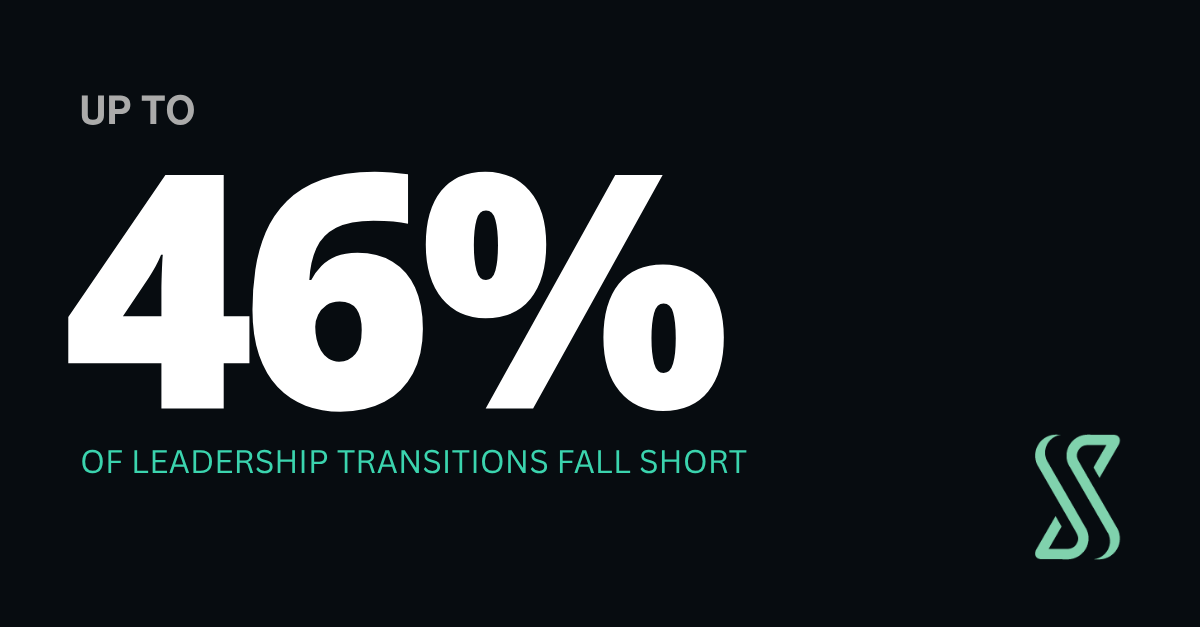

Between 27% and 46% of leadership transitions are judged failures or disappointments two years in (McKinsey, 2018). The team decision you make in your first six months is a large part of why.
A new CIO, COO or transformation director walking into a retail, consumer goods or healthcare company inherits more than a mandate. The inherited IT team knows where the ERP was customized ten years ago, which integration between the POS and the ERP breaks every month-end, and why one country still runs its own spreadsheet.
Reading time: 8 minutes | Keywords: inherited IT team, evaluate inherited IT team, talent decisions for new executives, CIO transition, learnability, AI skills
| Key Takeaways |
Between 27% and 46% of leadership transitions are judged failures or disappointments two years after they happen (McKinsey, 2018).
|
Some of that team will be essential to what comes next. Some will not. The hard part is that, in the first weeks, you cannot tell which is which.
Deciding how to evaluate an inherited IT team, and who stays, who changes role and who leaves, is one of the highest-stakes calls a new executive makes. Get it wrong in one direction and you lose the people who hold the operational memory of the business. Get it wrong in the other and you spend two years trying to build the future with a team designed for the past.
McKinsey's research on leadership transitions shows both failure modes are real. 68% of transitions founder on issues related to politics, culture and people, yet 72% of leaders say they wish they had taken less time to reshape their teams (McKinsey, 2018). Moving too fast and moving too slow both carry a cost. The question is how to decide with evidence instead of instinct.
Most new technology leaders were hired or promoted because they were very good at doing: running projects, solving incidents, choosing platforms. The new role asks for something else. A September 2026 HBR IdeaCast episode on what new CEOs get wrong describes the shift as moving from operational execution to building the conditions in which others can lead. The same applies one level down. A CIO who keeps solving problems personally becomes the bottleneck, and learns very little about the team's real capability.
Orchestrating means your first job is not to fix things. It is to understand who can fix what, how fast they learn, and where the knowledge sits. That changes how you spend the first 90 days. It also changes what you look for, because the skills that made a team effective under the previous leader are not necessarily the ones the next stage needs.
AI makes this sharper. McKinsey's State of Organizations 2026 estimates that around 75% of current roles will need reshaping, with skill mixes that combine technological fluency with social and higher-cognitive capabilities. The same report finds that more than 70% of the skills employers seek are used in both automatable and non-automatable work. In practice, most of your inherited team's skills will stay relevant. They will be applied differently.
The most common bias is recency: judging people by the last incident, the last project, or the opinion of whoever briefed you first. The second is familiarity: rating people who communicate like you as more capable. Both get worse because new leaders receive filtered information. The same IdeaCast episode notes that what reaches the top is often softened on the way up.
A capability audit reduces both. Assess each person on four dimensions, separately:
Use evidence from real work, not interviews alone. Give people a scoped problem in their first weeks with you: map the integration between the ERP and the warehouse management system, document the month-end close dependencies, propose how a manual process could be automated. How they approach it tells you more than their CV.
Learnability deserves more weight than it usually gets. Demand for AI fluency in US job postings has grown sevenfold in two years (McKinsey, 2026). No inherited team will have the AI skills the next three years require. The useful question is who can acquire them.
"No inherited team has the AI skills the next three years require. The useful question is who can learn them."
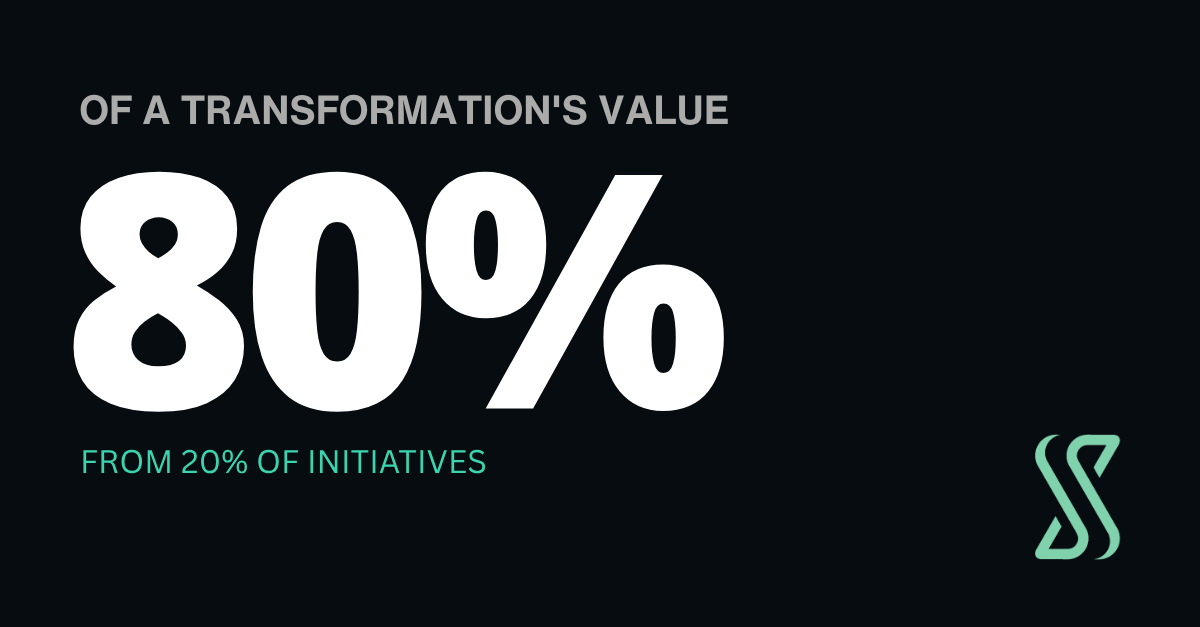
A new leader who tries to evaluate the team, redesign the organization, renew the ERP and launch an AI program at the same time usually does none of them well. BCG's 2026 research on transformations finds that about 70% fall short of their objectives, and that companies can often capture 80% of a transformation's value by focusing on roughly 20% of initiatives.
This matters for talent decisions because team design should follow priorities, not the other way around. If the next 18 months are about stabilizing the core ERP and cleaning master data across countries, the people who know the current system are your most valuable asset, however they score on future skills. If the priority is a new digital sales channel, the profile you need changes.
Define the two or three outcomes the business needs from technology in the next 18 months before you finalize any structural decision. Then evaluate the team against those outcomes.
With the capability audit and the priorities in hand, each person falls into one of four groups:
Redeployment is more common than many new leaders assume. Where generative AI eliminated roles entirely, 54% of leaders upskilled, reskilled or redeployed the affected employees, and only one in five eliminated the role altogether (McKinsey, 2026). That is a useful reference point when a board or investor suggests AI will justify a clean sweep.
The framework also protects you from the opposite error. Keeping everyone because the team is loyal and the systems are running is a decision too, and it often shows up 18 months later as a transformation that never quite started.
"Moving too fast and moving too slow both carry a cost. The real mistake is deciding without evidence."
In retail, consumer goods and healthcare companies, critical IT knowledge tends to live in two or three people. The one who built the pricing and promotions logic. The one who knows how store sales reconcile with stock and invoicing. When one of them leaves, the issue is not a vacancy. It is a gap in how the business operates.
Harvard Business Review (2026) argues that turning individual talent into organizational excellence is a design problem rather than a people issue, built on development through real work, team accountability and disciplined routines. Applied to an inherited IT team, it means succession cannot depend on goodwill or on a handover document written in the last two weeks of someone's notice period.
Design it into the structure:
The cost of skipping this shows up quickly. When transitions struggle, direct reports' performance is 15% lower and they are 20% more likely to be disengaged or leave the organization (McKinsey, 2018). In a team of 15, losing the wrong two people can stall an ERP rollout for months.
"When the person who knows how store sales reconcile with stock and invoicing leaves, you don't have a vacancy. You have a gap in how the business operates."
A phased plan keeps the operation running while the structure changes. HBR's 2025 guidance on leading a team you've inherited frames the challenge as a balance between urgency and patience. In practice, it looks like this.
Meet everyone individually. Map systems, integrations and who knows what. Identify single points of failure. Make no structural announcements, but make clear that an evaluation is happening and how it will work.
Run the capability audit. Assign scoped problems linked to the priorities. Confirm the two or three technology outcomes for the next 18 months with the CEO or executive committee.
Place each person in one of the four groups. Start knowledge transfer before any exit. Announce structural changes in one clear communication rather than in drips, and explain what will stop as well as what will start.
Hire for the gaps the audit revealed, especially in data, integration and AI. Move accelerators into visible roles. Track stability through the transition: incident volume, delivery timelines and retention of key people.
Pace matters inside this structure. 92% of external hires take far more than 90 days to reach full productivity (McKinsey, 2018), so the plan should account for your own learning curve too. Six months is long enough to decide with evidence and short enough that the team does not settle into uncertainty.
The executive who treats an inherited team as either an obstacle or a given usually pays for it later. The one who treats it as a set of capabilities to audit, protect and redesign builds the organization the next stage needs without losing the one that keeps the business running today.
Do you know which people in your IT team hold the knowledge your operation can't run without?
A capability diagnostic maps skills, learnability and single points of failure before you make structural decisions. Let's look at your team together with Strolling Digital. Let's talk.
Assess each person separately on current technical competence, learnability, adaptability to change and leadership potential. Base the assessment on real work, such as a scoped problem tied to business priorities, rather than interviews or second-hand opinions. Evaluate the team against the two or three technology outcomes the business needs in the next 18 months.
Neither by default. Replacing people too quickly risks losing critical operational knowledge, while keeping everyone can slow the strategy. McKinsey (2026) found that where generative AI eliminated roles, 54% of leaders upskilled, reskilled or redeployed the affected employees, and only one in five eliminated the role entirely.
A phased plan of around six months works for most mid-sized and large organizations: 30 days to listen and map, 60 days to assess with real work, and 90 days to decide and sequence changes. McKinsey (2018) found that 72% of leaders wish they had taken less time to reshape their teams, so the evaluation should have a clear end date.
Learnability is how quickly a person absorbs new tools, processes or ways of working. It matters because the skills an IT team needs are changing fast: McKinsey (2026) reports that demand for AI fluency in US job postings grew sevenfold in two years. A person with high learnability can close skill gaps that no current team member covers today.
AI shifts the focus from current skills to how people will apply them. McKinsey (2026) estimates that around 75% of current roles will need reshaping, while more than 70% of the skills employers seek remain relevant in both automatable and non-automatable work. Evaluate who can learn to work with AI tools, and use AI to speed up knowledge capture, rather than assuming AI justifies replacing the team.
Treat succession as a design decision. Pair people who hold critical system knowledge with fast learners, make documentation of integrations and custom code a deliverable with a deadline, and review single points of failure every quarter. Start knowledge transfer before any exit is announced.