Change Management
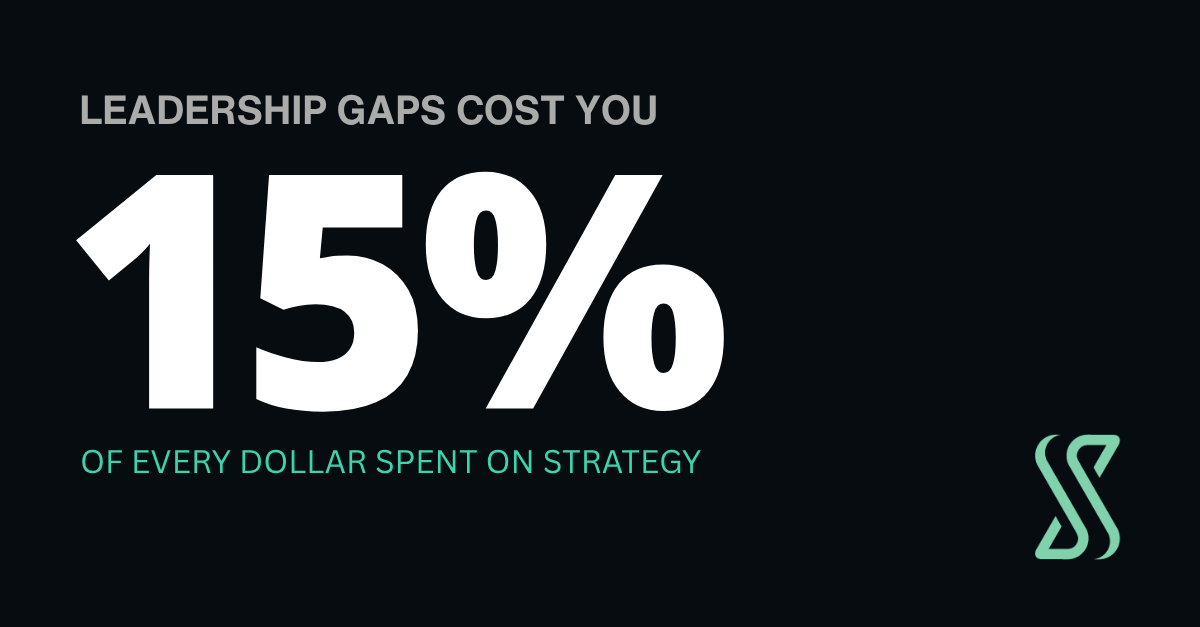


Poor sponsorship and leadership continuity waste nearly 15% of every dollar spent on strategic initiatives, and interim leadership is where that gap usually opens first
Interim management is still treated as a last resort in most transformation programs, something you reach for when someone critical walks out the door. That reaction costs more than the search itself.
Reading time: 6 minutes | Keywords: strategic interim management, interim leadership, transformation continuity
| Key Takeaways |
Poor sponsorship and leadership continuity waste nearly 15% of every dollar spent on strategic initiatives (PMI, 2014).
|
Most companies think about interim management the wrong way. It shows up in the org chart as a stopgap, a name inserted after someone resigns, after a leadership vacancy opens without warning, after the person who understood the system, the vendor relationships and the internal politics of a transformation program is already gone. By the time the search starts, the knowledge has already left.
Research from the Project Management Institute puts a number on what that gap costs: organizations waste nearly 15% of every dollar spent on strategic initiatives due to poor performance, and weak or missing sponsorship is a named driver (PMI, "Executive Sponsor Engagement," 2014). A transformation program without a clear leader at a given moment is not paused, it is bleeding budget.
In rental and construction companies specifically, where transformation programs depend on a handful of people who understand both the field operations and the systems layer, that vacancy period is when momentum dies. Vendors stop getting answers. Steering committees lose their anchor. Decisions get deferred because no one owns them.
The alternative is treating interim management as a planning decision, not an emergency one. That means identifying, before a gap opens, which roles in a transformation program carry knowledge concentration risk, and having a vetted interim option ready before it is needed. This is not about distrust in the permanent team. It is about acknowledging that transformation programs run on people who can leave for reasons that have nothing to do with the program itself.
Interim leadership planned in advance is a continuity decision. Interim leadership triggered by an exit is a recovery decision, and recovery is always more expensive than continuity.
Interim leadership is no longer a fringe scenario either. Interim leaders are now involved in one out of three CEO transitions (HBR, "Should You Appoint an Interim CEO?", 2026). Handled well, that involvement is a resourcing decision. Handled reactively, it is where board and program governance quietly start to erode.
The failure pattern is predictable. A key leader in the transformation program leaves. The company scrambles to fill the seat within days, prioritizing availability over fit. The interim hire arrives without context on the program's history, without relationships with the vendors already engaged, and without a mandate that is clearly defined by the steering committee.
What follows is a stall disguised as progress. Meetings continue. Status reports still go out. But decisions that require institutional memory, which vendor commitment was made under which condition, why a particular system integration was scoped a certain way, which stakeholder has veto power, get delayed or made incorrectly. HBR's reporting on interim CEO appointments notes that they often trigger negative reactions and long-term value loss precisely because the mandate is unclear from the start ("The Pitfalls of an Interim CEO," HBR, 2026).
Construction and rental businesses are particularly exposed to this pattern because so much operational knowledge sits with individuals rather than documented in systems. When that person exits mid-transformation, the interim brought in under pressure inherits a program with no clear map, and rebuilding it from scratch is where the delay actually comes from.
The cost is not just delay. It is decisions made twice, once wrong under the reactive interim, once correctly after a permanent or properly briefed replacement arrives. That is budget spent solving the same problem more than once.
Handled well, interim leadership is not a placeholder. It is a specific capability: someone who has led transformation programs before, who is not carrying internal political baggage, and who can make decisions fast because they are not trying to build a long career inside the organization.
PMI's reporting on interim project roles describes this directly: an interim brought in with a project manager's mindset, defined objectives inside a defined time frame, can produce lasting change that a caretaker mentality never would (PMI, "Temporary Influence," 2018). That influence comes from a different source than tenure. It comes from pattern recognition across multiple transformation programs, and the freedom to make unpopular calls that a permanent hire might avoid for the sake of internal relationships.
This is where the strategic framing matters. An interim leader brought in proactively, before a gap opens, can be selected against a defined mandate: stabilize a specific workstream, close a specific capability gap, or bridge a specific transition period with a clear handoff date. That selection process looks nothing like the panic hire that follows an unplanned exit. It is analytical. It is timed to the program's needs, not to a resignation letter.
The question is not whether you will need interim leadership at some point in your transformation. The question is whether you choose the moment, or the moment chooses you.
Not taking interim management seriously as a strategic lever has a direct cost on transformation outcomes, and it shows up in a few recurring patterns.
PMI's research on sponsorship found that one in three unsuccessful projects fail to meet their goals due to weak sponsor engagement, a gap that widens the moment a program loses its leader without a plan in place (PMI, "Executive Sponsor Engagement," 2014). Every one of the patterns above is preventable with the same decision: evaluate interim management before you need it, not after.
Do you know who would step in if the person running your transformation program left tomorrow?
If the answer takes more than a few seconds, that is the gap worth closing. Talk to Strolling Digital. Let's talk.
Interim management is the practice of appointing an experienced leader on a temporary, defined-term basis to manage or stabilize part of a transformation program. It is distinct from a permanent hire because the mandate, timeline and scope are set in advance rather than open-ended.
Interim management fits situations where a program needs continuity fast, where the gap is expected to be temporary, or where a specific capability is needed for a defined phase rather than the life of the program. It is also useful as a bridge while a permanent search is conducted properly, without rushing that search under pressure.
Reactive interim management is triggered by an unplanned exit and prioritizes speed over fit. Strategic interim management is planned in advance, with candidates identified and vetted before a gap opens, allowing the selection to be based on program needs rather than availability.
The main risks are decision delay, loss of vendor relationship continuity, and decisions made without full context that later need to be reversed. These compound in transformation programs because the interim leader often has no documented history of the decisions already made.
Vendors and implementation partners rely on a consistent point of contact who understands prior commitments and program context. An unplanned leadership gap disrupts that continuity, and rebuilding trust with a new counterpart typically slows delivery.
No. While much of the published research focuses on interim CEOs, the same logic applies to transformation program leads, CTOs, and other roles where institutional knowledge and steering authority are concentrated in one person.