Digital Transformation
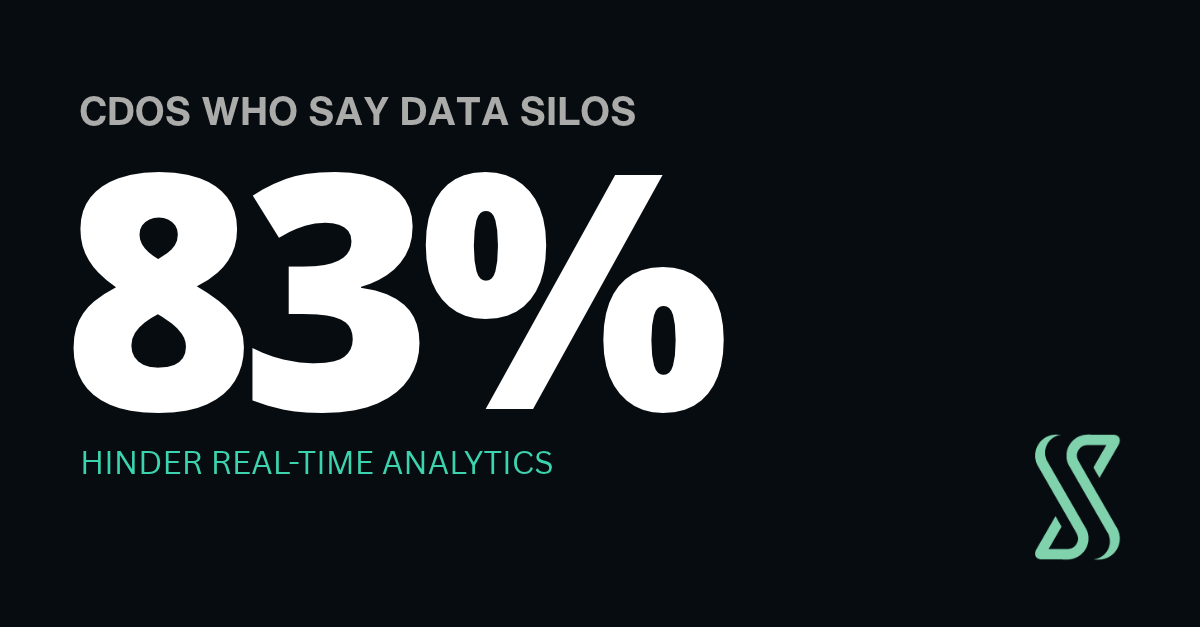

83% of chief data officers say data silos hinder real-time analytics. In retail and healthcare networks, each new location opened without shared data governance makes the gap wider.
Opening a new store or a new clinic feels like progress, but it rarely gives leadership a clearer picture of how the business is running. In multi-site retail and healthcare networks, the cause is almost always the same: nobody designed multi-site data governance.
Reading time: 8 minutes | Keywords: multi-site data governance, multi-location operational visibility, data silos, data islands, retail, healthcare
| Key Takeaways |
83% of chief data officers say data silos hinder innovation and their organization's ability to run real-time analytics (IBM Institute for Business Value, 2025).
|
Opening a new store or a new clinic feels like progress. It shows up on the map, in the press release and in the board deck. It rarely gives leadership a clearer picture of how the business is running. In retail and healthcare networks we see the same pattern again and again: the number of locations goes up and leadership's ability to see across them goes down. The cause is almost always the same. Nobody designed multi-site data governance. Everyone assumed it would be there.
In IBM's 2025 Chief Data Officer Study, 83% of the CDOs surveyed said data silos hinder innovation and their organization's ability to run real-time analytics (IBM Institute for Business Value, 2025). In a network of sites, those silos have street addresses.
For many retail and healthcare groups, expansion means accumulation. They acquire a regional chain, open in a new city, absorb a laboratory network. Each addition brings its own systems, its own way of recording a sale or a patient visit and its own local workarounds. Revenue consolidates on paper. Operations don't.
Footprint is easy to measure. Integration is not. A board can count sites, but it can't easily count how many definitions of "available stock" or "completed test" exist inside the group. That second number decides whether the first one is worth anything.
McKinsey's 2025 Global GRC Benchmarking Survey found that 48% of companies lack formal corporate governance procedures (McKinsey & Company, 2025). When formal governance is missing at group level, it is almost certainly missing in the operational data that moves between sites.
When a location joins without a shared operating architecture, it keeps the system it already had. Or it gets a local instance of the group's system, set up by whoever happened to be on site. Within a year the group has several versions of the truth. Each one is right locally and none can be compared centrally.
In retail, one country calculates sell-through before returns and another after them. In healthcare, one clinic records a patient as "seen" at check-in and another at discharge. Nobody made a bad decision. Nobody made a decision at all. Without a governed definition, each site fills the gap with its own logic.
The group then builds a layer of analysts and spreadsheets whose job is to translate site data into something leadership can read. It works, slowly. It is also where errors creep in, where reporting cycles stretch from days to weeks, and where critical knowledge ends up with a few people who become impossible to replace.
This is also why AI plans stall in multi-site groups. In the same IBM study, only 26% of CDOs were confident their data capabilities could support new AI-enabled revenue streams (IBM Institute for Business Value, 2025). An algorithm fed five definitions of stock gives five different wrong answers.
"The new clinic appears on the map the day it opens. In your data, it may never fully arrive."
In multi-site retail, inventory visibility is where the governance gap turns into money first. Stock is transferred between stores without being recorded centrally. Markdowns happen in one region while another reorders the same product. Central planning sets targets against figures that the stores already know are wrong.
"The product is on a shelf in one store. The system shows it in another. That gap is not a data problem. It is a margin problem."
In healthcare, a patient may visit a clinic, a laboratory and a specialist centre within the same group, and each one holds a separate record. Referrals between the group's own sites go untracked. Waiting times are measured differently in each centre. In retail, a customer buys online, returns the item in store and appears in the data as two different people. The group sees transactions but not relationships.
Hidden costs build up quietly: duplicate licences, local IT support for systems that exist only in one region, manual reconciliation every month-end, and compliance exposure when no one can show a regulator one consistent record. McKinsey's survey found that 42% of risk functions say their use of IT and GRC systems needs improvement, and a further 15% describe it as absent or lagging (McKinsey & Company, 2025). In regulated sectors like healthcare, that gap shows up in audits.
The usual response is a BI project: pull everything into one dashboard and give the board a single screen. The screen looks unified. The data underneath is not. When five sites calculate the same KPI five different ways, a dashboard shows the inconsistency more clearly but doesn't resolve it.
What blocks progress is rarely the tool. A Gartner survey of 223 data and analytics leaders in March 2026 found that 60% cited cultural resistance as a reason governance initiatives fail, compared with 40% who pointed to funding (Gartner, 2026). Gartner also predicts that by 2027, 60% of organizations that ignore the cultural side of data governance will fail to govern AI successfully (Gartner, 2026).
For a multi-site group, that means data governance is an operating decision before it is a technology decision. Someone has to decide what the numbers mean, who owns them and what each site is required to record. Software can enforce those decisions. It can't make them.
"A dashboard built on five definitions of the same number doesn't give you visibility. It gives you a faster argument."
Centralizing the architecture doesn't mean centralizing every decision. Sites still run their day-to-day operations. What changes is that every site records, defines and shares operational data the same way, so the group can govern the network as one business.
Products, locations, customers or patients, staff and suppliers are defined once, at group level. Sites use the master data. They don't recreate it. When a new location opens, it inherits the model on day one instead of building its own.
Before configuring any system, the group agrees on the operational events that matter: goods received, stock transferred, sale completed, return processed, appointment booked, result delivered. Each one gets a single definition and a single moment when it is recorded. Systems are then configured to that standard, not the other way round.
The integration layer between sites, systems and the centre is a permanent asset, not a one-off project tied to each acquisition. A new site plugs into an existing structure with a defined onboarding sequence, instead of opening another custom project.
Each data domain has an owner: a person, not a department. Gartner's recommendation points the same way: governance should be shared between business and technology rather than treated as an IT responsibility (Gartner, 2026).
In our work on the point-of-sale transformation at Yves Rocher in Spain and Italy, and on commercial digitalization at Unilabs, the technical rollout was never the hardest part. The harder work was getting teams in different countries to agree on what the data meant and who was accountable for it.
Before approving the next location or acquisition, leadership can ask five questions:
If the answers are vague, the next location will add complexity faster than it adds revenue.
More sites can strengthen a retail or healthcare group, but only if the operating architecture grows with them. Visibility for leadership doesn't come from more points on the map. It comes from shared definitions, shared processes and a data model every location uses from the day it opens. Groups that build that foundation first can expand without losing sight of the business. Groups that don't will keep adding sites and keep seeing less.
How many versions of the truth is your network running today?
Before the next opening or acquisition, map where your site data diverges and what it is costing you, in a diagnostic session with Strolling Digital. Let's talk.
Multi-site data governance is the set of shared definitions, processes and ownership rules that decide how every location in a network records and shares operational data. It makes sure that a sale, a stock movement or a patient visit means the same thing at every site. Without it, each location builds its own version of the truth and leadership can't compare or consolidate performance reliably.
Each new location usually brings its own systems, definitions and workarounds. If no shared operating architecture is in place, every site adds another data island that has to be reconciled by hand. The network gets larger while the group's real-time view of operations gets weaker.
Data islands are sets of operational data held at site level that can't be compared or combined with data from other sites. In retail they show up as inconsistent inventory and sales figures between stores. In healthcare they show up as separate patient records and differently measured activity across clinics and laboratories in the same group.
No. A dashboard displays the data underneath it. If sites define and record the same KPI differently, the dashboard shows the inconsistency more clearly without resolving it. The fix is shared definitions, standard processes and clear data ownership, which a BI tool can then display reliably.
It includes one data model owned at group level, standardized definitions for key operational events, an integration layer that every site connects to, and named owners for each critical data domain. Sites keep control of their day-to-day operations, but they all record and share data the same way.
Common signs are reporting that depends on manual consolidation, KPIs calculated differently by region, and no one able to name the owner of master data. Another warning sign is newly acquired sites taking months to report on the group's model. If month-end close depends on a few analysts reconciling spreadsheets, the governance gap is already affecting decisions.