Change Management

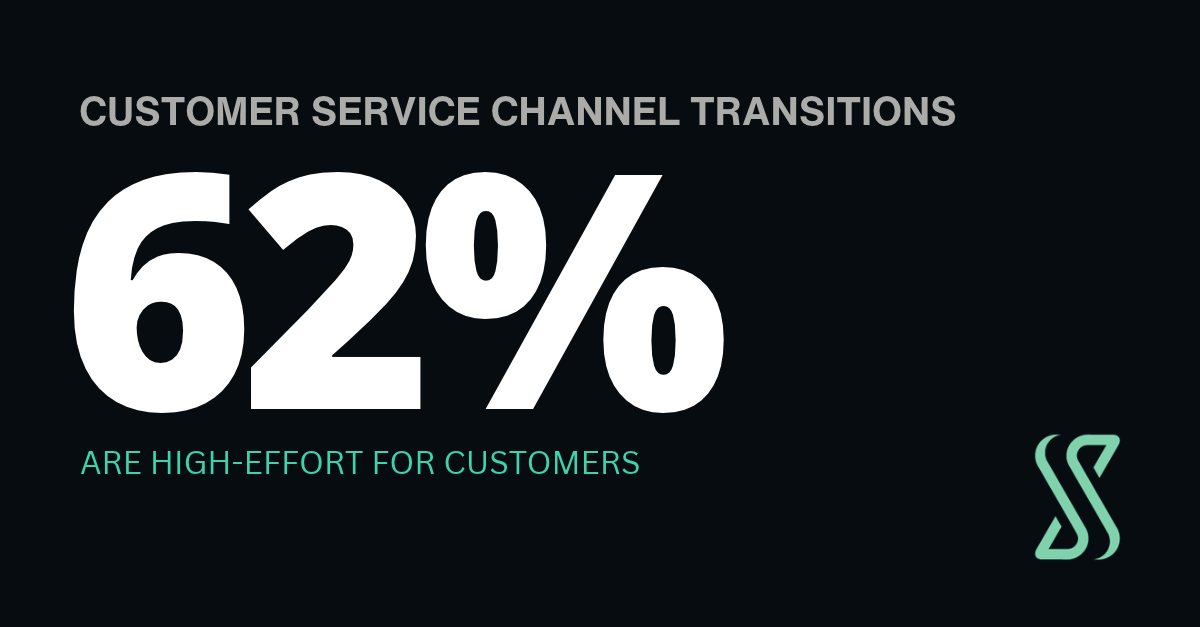
62% of customer service channel switches end without a resolution (Gartner, 2023). The cause is rarely the channel. It is the systems behind it.
Omnichannel fails when disconnected systems keep each channel working on its own. The CRM, the ERP, the e-commerce platform and the service desk don't share what they know, and the customer pays for every gap between them.
Reading time: 9 minutes | Keywords: omnichannel disconnected systems, customer service channel integration, real-time data integration, customer experience, retail, health retail
| Key Takeaways |
62% of customer service channel transitions are high effort, meaning the switch does not lead to a resolution (Gartner, 2023).
|
A customer orders a product online, sees "available in store" on the website, drives to the shop and finds an empty shelf. She calls customer service. The agent cannot see the online order, asks for the order number, then for the email address, then transfers her. The next agent asks the same questions. Nobody in that chain did anything wrong. The CRM, the ERP, the e-commerce platform and the service desk simply do not share what they know.
This is what omnichannel looks like when it runs on disconnected systems. The company has opened every channel the customer could ask for, and each one works on its own. What fails is the space between them. In retail and health retail, where a single customer moves between store, website, app, phone and in some cases a clinic or a lab, that space is where loyalty is won or lost.
At Strolling Digital we call this corporate amnesia: the organization forgets the customer every time she changes channel. The argument of this article is simple. Customer experience is a direct reflection of how internal systems are connected, and omnichannel is fixed with data integration engineering, not with another front end.
Customers no longer stay in one channel. According to McKinsey (2022), more than half of B2C customers use three to five channels every time they buy something or resolve a request. Gartner (2023) found that 88% of customer service journeys that begin in self-service end up touching other channels, such as phone, chat or email.
Each of those transitions is a handoff of information. If the receiving system has no access to what the previous one recorded, the customer pays the price. Gartner's survey of 1,492 B2B and B2C customers showed that 62% of channel transitions are high effort, meaning the switch did not lead to a resolution.
In most of the organizations we work with, the root cause is architectural. Each system was bought to solve one department's problem: the ERP for finance and logistics, the e-commerce platform for digital sales, the POS for stores, the CRM for marketing, the ticketing tool for service. Each one holds a partial version of the customer, the product and the order. No one owns the full picture.
These are the failure points we find again and again when we map customer journeys in retail and health retail:
None of these are design problems. A better interface on top of the same disconnected data produces the same contradictions, just with nicer fonts.
"The website says it's in stock. The store says it's sold out. That gap is not a UX issue. It is an integration issue."
The cost of corporate amnesia shows up in three places: the customer relationship, the operating model and the revenue line.
Every repeated question is a signal that the company does not know who it is talking to. Forrester (2020) found that one-third of US adults are less likely to visit a store if its inventory is not available online, and 48% look up product availability online before buying offline. When that information is wrong, the trip to the store becomes the moment the customer stops trusting the brand.
Gartner (2023) also showed the other side: 93% of customers reported high satisfaction when the transition between channels was smooth. The difference between those two outcomes is whether the data travelled with the customer.
Disconnected systems create manual work that nobody budgets for. Agents search across three or four screens, stores call the warehouse to confirm stock, and teams reconcile orders in spreadsheets at the end of the week. Gartner (2023) estimated that smooth transitions save an average of four minutes of agent time per customer journey, because agents don't have to ask for information the customer already gave. Multiply that by the volume of a mid-sized retailer's contact center and the cost of disconnection becomes visible on a P&L.
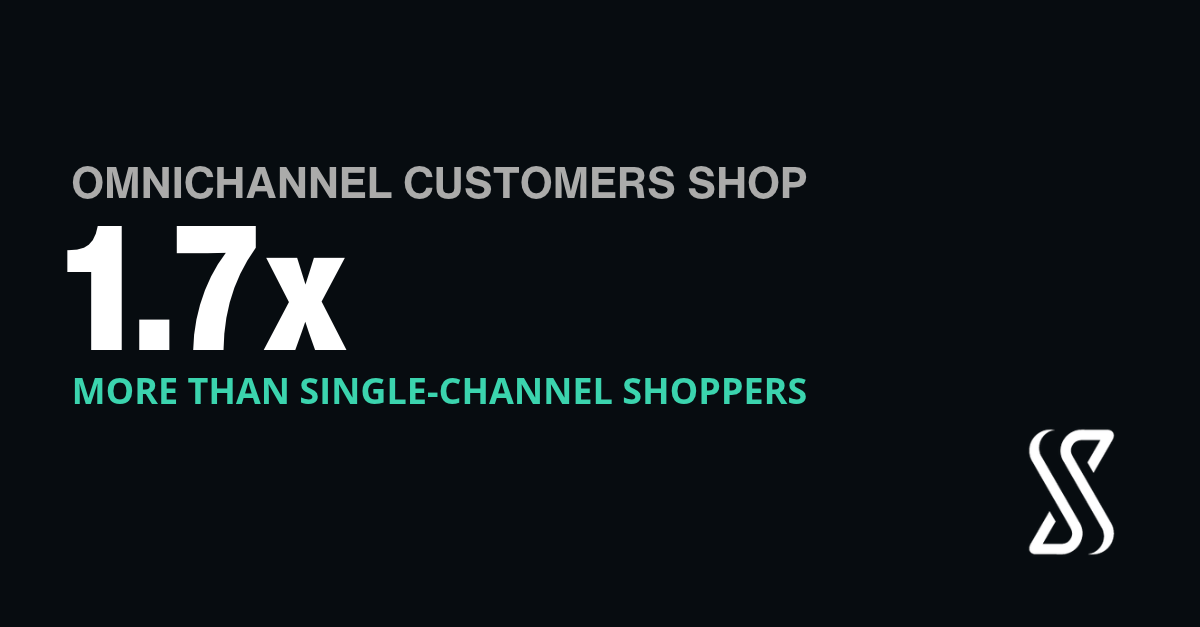
According to McKinsey (2022), omnichannel customers shop 1.7 times more than single-channel shoppers. That value only materializes if the channels behave as one. A customer who receives contradictory information does not become an omnichannel customer. She becomes a single-channel customer, or someone else's.
"Opening a new channel on top of disconnected systems does not add reach. It adds one more place where the customer can be forgotten."
The usual response to a poor omnichannel experience is to add something visible: a new app, a chatbot, a redesigned website, a loyalty program. These initiatives are easier to approve because the result can be shown in a demo. They also tend to make the problem worse, because each new touchpoint brings its own data store and its own version of the customer.
Bain & Company's 2023 study with Aptos, based on a survey of more than 300 retail executives, illustrates the gap. Only about half of the executives believe they have the right investment strategy to deliver a single view of customers across channels, and only about half consider their current technology adequate for their unified commerce goals. When choosing third-party solutions, 53% said ease of integration with existing systems was the most significant criterion, ahead of cost.
Retail leaders already know where the problem sits. The challenge is that integration work is invisible to the customer until it fails, which makes it harder to prioritize against projects that produce a screenshot.
Fixing omnichannel means making sure that every interaction leaves an immediate trace that the rest of the organization can read. In practice, that requires four decisions.
Bain (2023) reports that about 80% of retailers have already invested in real-time inventory management and visibility. The investment is there. What often is missing is the connection between that inventory data and the systems the customer and the front line actually use.
"Omnichannel is not decided in the app. It is decided in the integration layer nobody sees."
In our transformation projects, including POS transformation in retail stores across Spain and Italy and the digitalization of commercial processes in international healthcare, the starting point is never the technology catalogue. It is the customer's moments of friction. A useful sequence:
This sequence keeps the project anchored in operational reality. It also gives the leadership team a way to measure progress that goes beyond "the new app is live".
Customers never see your ERP, your CRM or your integration layer. They see the result: an agent who already knows their order, a store that has the product the website promised, an appointment change that reached the clinic. Omnichannel strategy succeeds or fails on whether the systems behind those moments share the same truth at the same time.
For CEOs, COOs and CTOs in retail and health retail, the question is not how many channels the company offers. It is how many of them remember the customer.
How many times does your customer have to repeat themselves before someone in your organization can help?
If your channels work but your systems don't talk to each other, book a diagnostic session to find where the connection breaks with Strolling Digital. Let's talk.
Omnichannel strategy usually fails because the systems behind each channel (CRM, ERP, e-commerce, POS and service desk) do not share data in real time. Each channel works on its own, but customer history, stock and order status are not consistent across them. The customer experiences this as having to repeat information and receiving contradictory answers.
Multichannel means a company offers several channels, each operating independently with its own data. Omnichannel means those channels share the same customer, product, stock and order data, so the experience is continuous when the customer moves from one to another. The difference is in the integration behind the channels, not in the number of channels.
When systems are disconnected, agents cannot see what the customer did in other channels, so they ask for the same information again. Gartner (2023) found that 62% of customer service channel transitions are high effort, meaning the switch did not lead to a resolution. This increases handling time, repeat contacts and customer frustration.
Corporate amnesia is the situation where an organization forgets the customer every time they change channel. It happens when CRM, ERP, e-commerce and service platforms operate as separate silos. The customer has to explain their problem again and may receive contradictory information about stock or order status.
Start by defining a system of record for each core data object (customer, product, stock, order). Then connect systems through APIs and event-driven integration instead of overnight batches, and build a unified customer profile through a CDP or a governed CRM layer. Finally, assign business ownership of data quality so contradictions between channels have someone accountable for resolving them.
Customer-facing data does. Stock availability, order status and recent interactions need to be updated in real time or near real time, or the customer will receive outdated information. Back-office reporting can usually tolerate longer sync cycles, so latency should be defined per use case.