
Project Management

Only 26% of enterprises have operationalized AI at scale. In global retail, the bottleneck is rarely the technology. It is the operating model underneath it.
Most retailers do not stop scaling because demand runs out. Operational scalability in retail breaks when every new country, banner or store format adds another layer of exceptions to a system that was never built to absorb them.
Reading time: 9 minutes | Keywords: operational scalability in retail, scalable multi-store operating model, standardized operating core, composable architecture, AI in retail supply chain
| Key Takeaways |
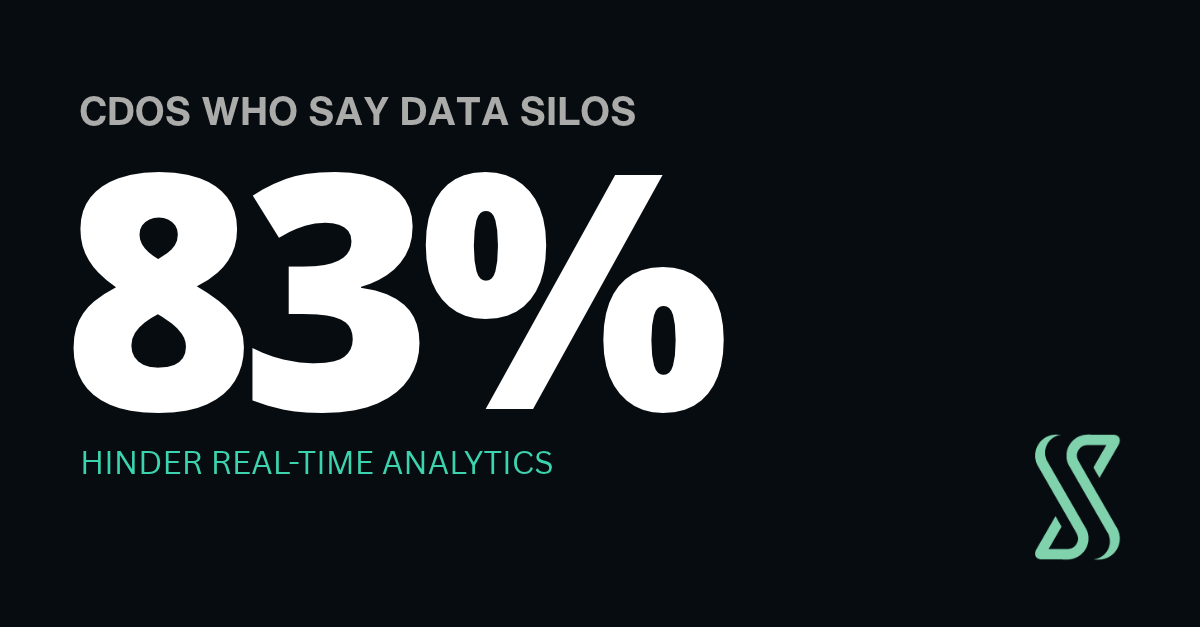
Only 26% of enterprises consider themselves advanced in operationalizing AI, and the top barriers they cite are integration complexity (41%) and data silos (38%) (Forrester Consulting for FPT, 2026).
|
The pattern is familiar from inside projects. The first ten stores run fine. By the third country, the ERP has split into local instances, pricing lives in spreadsheets, inventory visibility arrives a day or two late, and finance closes the month through manual reconciliations. Every opening becomes a small IT project with its own budget, its own consultants and its own delays.
The model that works is not new in concept, but cloud platforms have made it affordable for mid-size and large retailers: a standardized operating core that is identical everywhere, surrounded by modular components that absorb what is genuinely local. One part stays fixed. The other plugs in and out.
Legacy retail systems were built for one market. When the business crosses a border, the fastest answer is to customize: a tax rule hard-coded here, a payment method patched there, a customs workflow built directly into the order process. Each decision is reasonable on its own. Together, they turn the core system into a collection of country-specific forks that nobody wants to touch.
The cost goes beyond the IT budget. McKinsey research found that even high-performing companies lose around 30% of their strategy's full potential to shortcomings in their operating model (McKinsey, 2025). In multi-country retail, a large part of that gap sits in the exceptions accumulated with each expansion.
The deeper cost is operational. When the cost and time of opening a new market grows with each expansion instead of falling, the company is not scaling. It is accumulating complexity.
"If opening a new country requires reprogramming the operation, you do not have a growth model. You have a series of IT projects."
The core is the part of the operation that defines how the group works and how it reads its own numbers. It includes the process model, the master data (product, location, supplier, customer), the financial structure, the inventory logic and the KPI definitions.
The rule we apply is simple: if it affects how headquarters compares one market with another, it belongs in the core. If it only affects how a local team complies with local rules, it does not.
In many multi-country retailers, "available stock" means different things in different markets. One country counts goods in transit, another does not. One includes store reserve, another excludes it. Headquarters receives two numbers that look comparable and are not. Allocation, replenishment and markdown decisions are then made on figures that cannot be trusted at group level.
A standardized core is what makes real-time visibility of supply chain, omnichannel inventory and financial data possible. Without a shared data model, real time just means seeing inconsistent numbers faster.
The order of decisions matters. In a McKinsey survey of global supply chain leaders, more than 60% of planning projects ran late or over budget, and 70% of respondents pointed to poor process design as a cause (McKinsey, 2021). Defining the core comes before choosing the platform.
"Your stock figure in Madrid and your stock figure in Milan should mean the same thing. When they don't, the group is managing two businesses under one name."
Every market has real particularities that cannot be standardized away. The question is where they live. In a monolithic system, they live inside the core. In a composable architecture, they live in modules connected to the core through stable interfaces, so they can be added, replaced or removed without changing the core itself.
Gartner describes this approach as building the business from interchangeable capability blocks, and projected that organizations adopting it would outpace competitors by 80% in the speed of new feature implementation (Gartner, 2020).
The practical test for a scalable multi-store operating model is direct: can the company open a new country without changing a line of code in the core? If not, something local has leaked into it.
Modularity without governance produces the same problem in a different shape: dozens of connectors, each owned by someone different, each with its own data definitions. A composable model needs a clear owner for the core, integration standards that every module must respect, and a decision rule for when a local request becomes a core change.
AI in retail operations depends on the core more than on the algorithm. Demand forecasting, replenishment, allocation and markdown optimization all need consistent product, location and stock data across markets. When each country structures its data differently, every model has to be rebuilt locally, and the benefit of scale disappears.
This is part of why so few companies get past the pilot stage. Only 26% of enterprises consider themselves advanced in operationalizing AI, and the barriers they cite most are integration complexity (41%) and data silos (38%), not the models themselves (Forrester Consulting for FPT, 2026). Where the data foundation is in place, the impact is measurable: early adopters of AI-enabled supply chain management improved logistics costs by 15%, inventory levels by 35% and service levels by 65% compared with slower competitors (McKinsey, 2021).
The useful starting point is a list of decisions that repeat every week in every store: how much to reorder, where to send incoming stock, when to discount. Each of those decisions has an owner, a frequency and a measurable outcome. That is where AI earns its place. A model that improves a decision made thousands of times a week across the network is worth more than a sophisticated one used once a quarter.
The composable principle applies here too. The forecasting logic is shared across the group. Local signals, such as holidays, weather patterns or regional events, feed into it as inputs. The model does not change per country. Its inputs do.
"AI does not fix a fragmented operation. It scales whatever you already have, including the fragmentation."
Once the core is standardized, a large share of the work that used to be repeated in every country can be centralized: master data management, financial close, procurement support, first-level IT and system configuration for new markets. Global service centers stop being a cost-reduction exercise and become the team that runs the core on behalf of every market.
Centralizing does not scale on its own. McKinsey's survey on automation found that two-thirds of organizations were at least piloting business process automation, up from 57% two years earlier, yet the share achieving success had not changed significantly (McKinsey, 2021). Automating fragmented processes produces fragmented automation.
The structure that supports this model has three layers. Global process owners decide how the core works and protect it from local exceptions. Service center teams operate it and onboard each new market. Local business partners translate market needs into requests and decide, with the process owner, whether something is a configuration or a core change.
In practice, the bottleneck is often the absence of someone with the authority to say no to a local customization.
In the POS transformation Strolling Digital led for Yves Rocher across Spain and Italy, store systems had to serve two countries with different fiscal and operational requirements. The same tension appears in every multi-country retail project: what is shared, what is local, and who decides.
The logistics merger and process migration for Stanhome between Spain and France raised the same question at the supply chain level. Two operations had to converge on one process model without losing what each market needed to function.
Healthcare follows the same logic. In the commercial digitalization work with Unilabs, an international group, aligning IT with the business meant agreeing first on shared definitions and processes before deciding on tools.
A full replacement of the legacy estate is rarely the right first move. A more reliable sequence:
Operational scalability in retail is a design decision, made long before the next store opens. Retailers that make it early grow with each expansion. Those that postpone it pay for it at every opening.
How many of your last openings required changes to your core system?
If the answer is more than zero, your operating model is setting the pace of your growth. Book a diagnostic session with Strolling Digital. Let's talk.
Operational scalability in retail is the ability to add stores, countries or formats without the cost and complexity of the operation growing at the same rate. A scalable retailer opens each new market faster and cheaper than the previous one. It depends mainly on the operating model and system architecture, not on store-level execution.
A standardized operating core is the set of processes, master data, financial structure, inventory logic and KPIs that are identical in every market. It defines how the group operates and how it compares performance across countries. Local requirements such as taxes or payment methods are kept outside it.
Composable architecture is a system design where local or specialized capabilities, such as tax engines, payment methods or customs rules, connect to a stable core as interchangeable modules. Each module can be added, replaced or removed without modifying the core. This lets retailers enter new markets without reprogramming the whole operation.
Monolithic systems absorb local requirements by customizing the core, which creates country-specific versions that are expensive to maintain. Each new market adds more exceptions, so the cost and time of expansion grow instead of falling. They also make consistent group-level data harder to obtain.
AI improves recurring decisions such as demand forecasting, replenishment, stock allocation and markdowns. Its impact depends on consistent product, location and stock data across all markets. McKinsey found that early adopters of AI-enabled supply chain management improved inventory levels by 35% and service levels by 65% compared with slower competitors (2021).
Global service centers run the standardized core for all markets, handling work such as master data, financial close, procurement support and new market configuration. This removes duplicated effort in each country. They work alongside global process owners, who protect the core, and local business partners, who bring market needs.
Start by mapping which requirements truly differ by country, then define a shared data model and KPIs. Use the next market opening as the first one built on the core plus local modules, rather than migrating everything at once. Track the cost and time of each opening to confirm the model is scaling.