Gestión del Talento
Does your team have the talent to execute your transformation

Strolling Digital
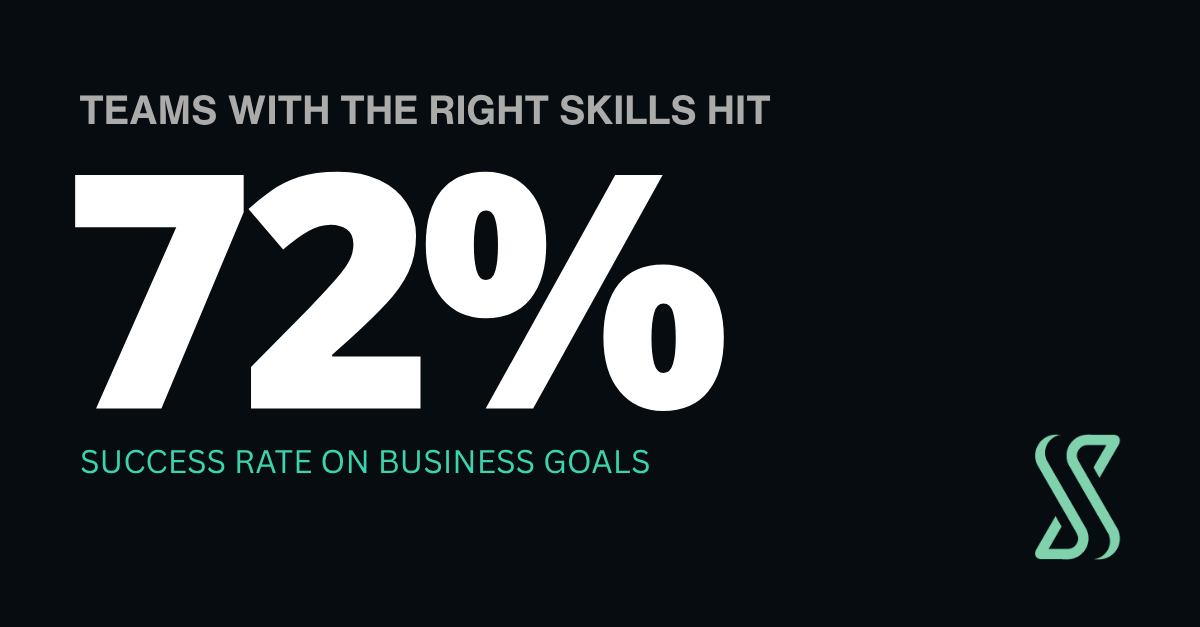
Organizations that excel in power skills hit a 72% success rate on business goals. The rest land at 65%.
That nine point gap is not about technology. It is about whether the people running the transformation were ever assessed for the job, and whether your team capability assessment happened before the budget got approved, not after the rollout stalled.
Reading time: 8 minutes | Keywords: team capability assessment, organizational readiness, transformation talent gap
| Key Takeaways |
Organizations that excel in power skills achieve a 72% success rate on business goals, versus 65% for the rest (PMI, 2025).
|
How do you know your team can execute the change
Every transformation plan gets a round of nods in the boardroom. Fewer get tested against the people who have to run it day to day. A director can present a roadmap, get budget approval and still walk into a wall six months later, not because the plan was wrong, but because nobody asked whether the operations team, the site managers or the logistics leads had the bandwidth, the skills or the appetite to carry it out.
This matters more in rental and construction, where the workforce running the transformation is often the same workforce running the yard, the fleet or the site. There's no separate digital team absorbing the change. The person entering asset data into a new system is also the person who has to hit today's delivery schedule. When capability isn't assessed upfront, the plan collides with daily operations, and daily operations wins.
A team capability assessment isn't a survey asking people if they're on board. It's a structured look at three things: whether the team has the technical skill to operate the new process, whether they have the time to learn it without dropping current commitments, and whether they trust the leadership asking them to change. Skip any one of the three and adoption slows, regardless of how good the software is.
Your team agreed to the roadmap. That is not the same as your team being able to run it.
The question worth asking before the next steering committee isn't whether the team likes the idea. It's whether this specific group of people, with their current skills and workload, can actually deliver what the plan assumes.
The real cost of employee turnover
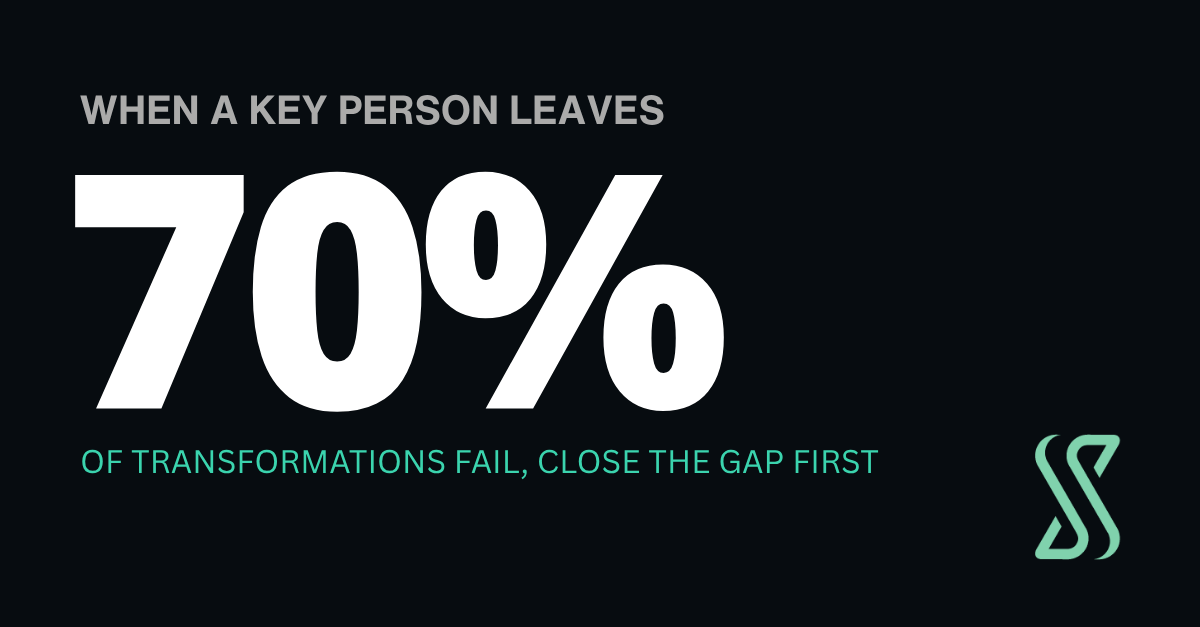
Turnover during a transformation program isn't a side effect. It's often the biggest line item nobody budgeted for. Once a transformation is announced, attrition can double, and the first people to leave are often the ones who understood why the legacy process worked the way it did (KPMG, cited in Harvard Business Review, 2025). Losing that person doesn't just leave a salary line open, it makes the new process harder to design correctly, because nobody left can explain why the old one worked.
The PMI Talent Triangle frames the skills a transformation needs to survive as three overlapping sets: technical project skills, leadership skills and strategic business skills, together known as power skills when combined with the softer capabilities (PMI, 2025). Most companies staff for the technical set and assume the other two will show up on their own. They usually don't, and that gap is where rotation accelerates, because people who don't see a path to leading the new way of working leave for companies that offer one.
Employees with access to development opportunities during a transition are 3.6 times more likely to stay engaged than those without (Gallup, cited in Harvard Business Review, 2025). That single number is the strongest argument for investing in reskilling before the rollout starts, not after the exit interviews pile up.
Keys to leading a transformation
Leading a transformation from inside operations is different from managing one from a project charter. Three things separate the leaders who keep their teams through the change from the ones who lose them.
- Model the behavior first. If leadership asks the team to adopt a new system, leadership uses it first, visibly, including the parts that are inconvenient. Harvard Business Review's 2026 piece on modeling transformation makes the same point directly: employees calibrate effort to what they see leadership actually do, not what leadership says in a town hall.
- Name the tradeoff honestly. Every transformation asks people to be slower before they're faster. Leaders who admit that upfront keep more trust than leaders who promise a seamless switch that never arrives.
- Give the team a real role in shaping the rollout. Not a survey. A seat in deciding sequencing, timing and which shortcuts are acceptable during the transition. Teams that helped shape the plan defend it when it gets hard. Teams that only received it don't.
Reskilling closes a skill gap. It does not close a leadership gap, and mistaking one for the other is how transformations stall.
What to do if your team isn't capable
Sometimes the honest answer to the assessment is that the current team can't execute the plan as scoped, not because people are unwilling, but because the skill or the bandwidth genuinely isn't there yet. That's not a reason to shelve the transformation. It's a reason to change how you staff it.
Reskilling works when the gap is narrow and the timeline allows for it, typically for process and systems skills that build on what the team already knows. It doesn't work as a fix for a leadership gap or for a role that needs to be filled in the next ninety days.
Interim management fills that faster path. Bringing in an experienced operator for the duration of the critical rollout phase, someone who has run a similar transformation before, gives the team a working model to learn from while the permanent capability is built underneath. This is different from bringing in a consultant who writes a report and leaves. An interim lead stays inside the operation, makes the calls, and hands over a team that's actually ready when the engagement ends.
The people who leave first are usually the ones who understood why the old process worked. That is expensive in a way no budget line captures.
The choice between reskilling, interim leadership and hiring isn't binary. Most transformations that hold up under pressure use a mix, reskilling the team that stays, bringing in interim leadership for the gap that can't wait, and being honest with the board about which is which.
Have you actually tested whether your team can execute the plan you're about to present for approval, or are you assuming they will?
Strolling Digital works inside the rollout, not from a slide deck. Let's talk.
Frequently Asked Questions
How do I assess if my team is ready for a digital transformation?
Run a structured team capability assessment that looks at three things separately: technical skill for the new process, actual available bandwidth given current workload, and trust in the leadership driving the change. A general buy-in survey won't surface any of the three.
What causes transformation projects to fail?
Most failures trace back to a mismatch between what the plan assumes about the team's capacity and what the team can actually deliver on top of daily operations, not to the technology chosen. Organizations strong in power skills reach a 72% success rate on business goals, versus 65% for the rest (PMI, 2025).
How much does employee turnover cost during a transformation?
Attrition tends to double once a major change is announced (KPMG, cited in Harvard Business Review, 2025), and beyond the direct cost of replacing a role, the company loses the institutional knowledge of why the legacy process worked the way it did.
When should a company use interim management instead of hiring?
When a critical capability gap needs to be filled within the transformation's timeline and a full external hiring cycle would take longer than the rollout can wait, interim management gives the team a working leadership model without that delay.
Can reskilling replace the need for new hires during a transformation?
Reskilling works for narrowing skill gaps that build on what the team already knows, within a realistic timeline. It's not a substitute for filling a leadership gap or a role the rollout needs immediately.
What is the PMI Talent Triangle and why does it matter for transformation?
It's a framework describing three skill sets a project needs to succeed: technical project skills, leadership skills and strategic business skills (PMI, 2025). Transformations usually staff for the first and underinvest in the other two, which is where execution risk builds.
Why do employees leave during a digital transformation?
Employees with access to development opportunities during a transition are 3.6 times more likely to stay engaged (Gallup, cited in Harvard Business Review, 2025). Without that access, the people most capable of adapting are also the ones most likely to find that path elsewhere.
Sources & References
- PMI — PMI Talent Triangle: The Key to Project Management Success, 2025. Source for the power skills success rate and the three skill sets framework.
- KPMG, cited in Harvard Business Review — Your Transformation Can't Succeed Without a Talent Strategy, 2025. Source for the attrition rate after change announcements.
- Gallup, cited in Harvard Business Review — Your Transformation Can't Succeed Without a Talent Strategy, 2025. Source for the engagement rate tied to development access.
- Harvard Business Review — Model the Transformation You Expect Employees to Deliver, 2026. Source for the leadership modeling argument.